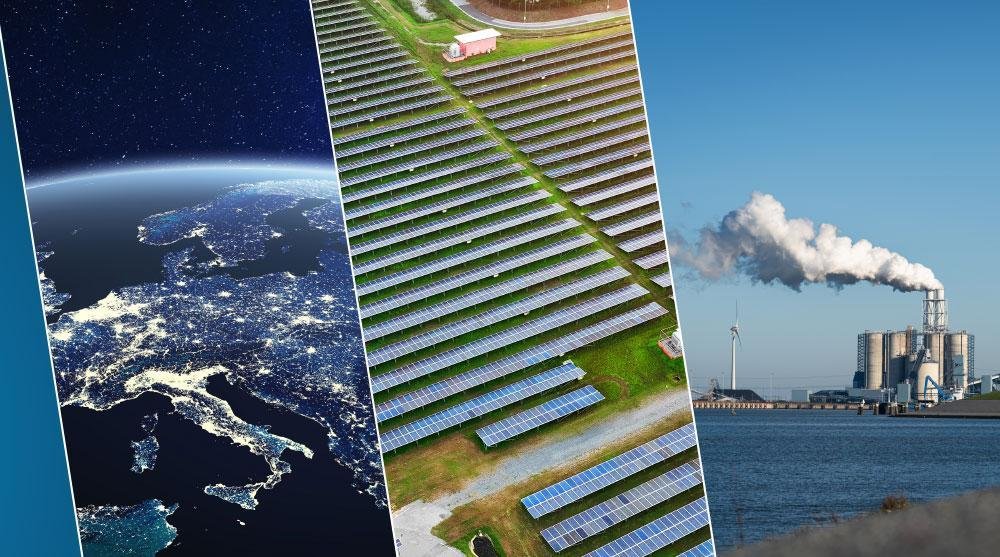
Europe’s latest energy shock linked to the Iran conflict is reigniting debate over whether faster investment in renewables, storage and electrification could have reduced the region’s exposure to volatile fossil fuel imports.
A Bloomberg Opinion analysis argued the European Union remains vulnerable because natural gas — much of it imported — still plays a major role in heating, industry and power generation. That dependence has left the bloc exposed to renewed geopolitical disruptions after already suffering through the 2022 energy crisis. (bloomberg.com)
Since the outbreak of the Iran conflict, oil and gas prices have surged globally, while shipping disruption and supply fears have increased inflation risks across Europe. Reuters reported that the war has deepened pressure on manufacturing activity and business costs across the euro zone. (Reuters)
Analysts say a faster rollout of wind, solar, batteries, heat pumps and grid modernization could have cushioned the blow by lowering imported fuel demand. Decentralized energy systems are also increasingly viewed as tools of economic security, not only climate policy.

The market response is already visible. Reuters reported rooftop solar demand has jumped sharply across Europe as households seek to cut bills and protect themselves from future price spikes. Installers in Germany and other markets have reported stronger orders for panels, batteries and home energy systems. (Reuters)
Still, the transition faces obstacles including slow permitting, grid bottlenecks, higher borrowing costs and dependence on imported clean-tech components. Many solar panels and batteries continue to come from China, creating a new set of strategic supply-chain questions.
For policymakers, the current shock may strengthen the case for treating renewables, storage and domestic energy capacity as part of national resilience planning rather than only emissions targets.

Why markets care
Higher fossil fuel prices can accelerate investment into utilities, renewables, grid technology and energy efficiency. At the same time, persistent energy inflation could weigh on growth and complicate ECB rate-cut expectations.
Sources
Bloomberg Opinion – Original Article
Reuters – Rooftop Solar Demand Surges
Reuters – Iran War Impact on Global Economy