Tesla and SpaceX have entered formal discussions over a potential combination that could bring electric vehicles, artificial intelligence, satellite communications and space infrastructure under one corporate structure. The talks introduce a new strategic possibility for Elon Musk’s business empire, although no final agreement has been reached.
Independent committees at both companies are examining possible transaction structures, including a SpaceX acquisition of Tesla or a merger under a new holding company. Any deal would face substantial challenges, including valuation negotiations, conflicts of interest, regulatory scrutiny and shareholder approval.
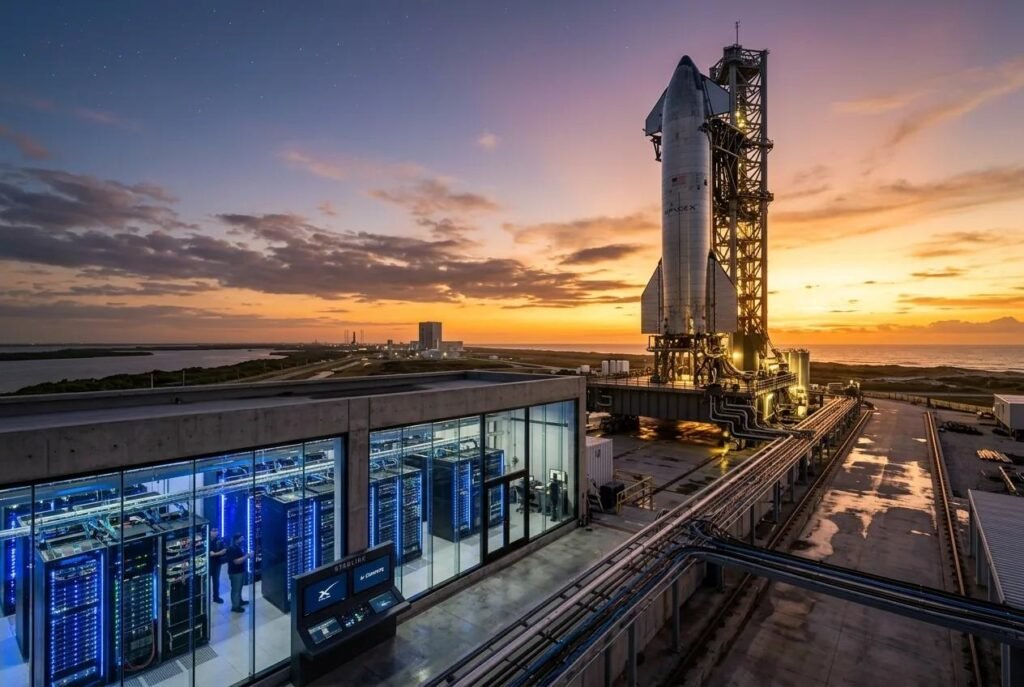
The potential combination comes as SpaceX expands beyond rocket launches and satellite internet into AI computing, while Tesla continues investing in autonomous driving, robotics and advanced computing infrastructure.
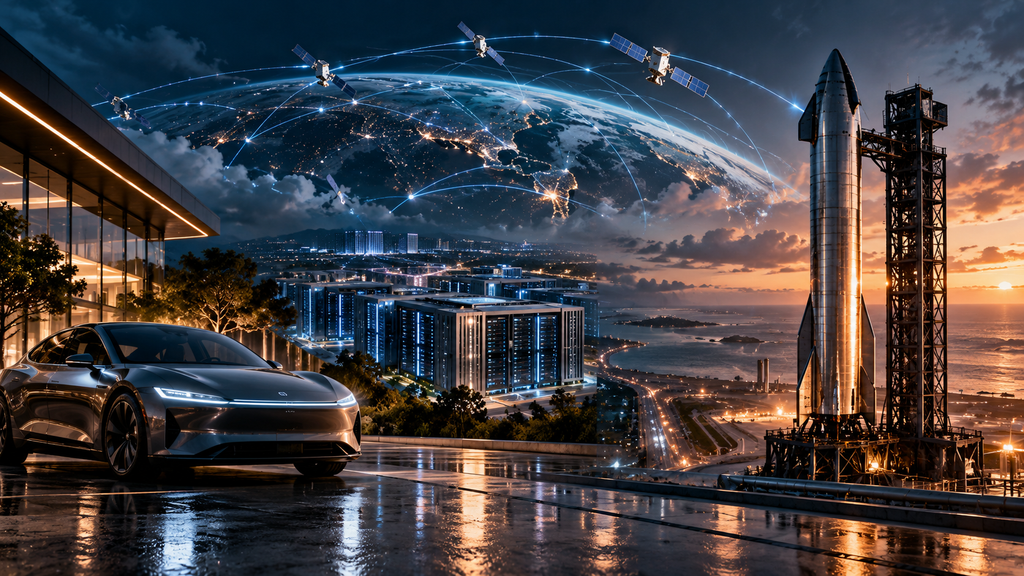
A Merger Takes Shape
Musk has publicly acknowledged the discussions while stressing that the decision rests with the independent committees rather than with him personally. Because he leads both companies and holds significant interests in each, the process requires careful consideration of competing shareholder interests.
The structure of a potential transaction remains unresolved. A SpaceX acquisition of Tesla could create a different ownership and governance arrangement from a merger conducted through a new holding company. Each structure would have different implications for valuation, financing, voting rights and the distribution of future returns.
The most contentious issue is likely to be the price at which Tesla shareholders would exchange their interests for shares in a combined business. Even a modest difference in the valuation assigned to each company could translate into substantial changes in shareholder ownership.
The discussions therefore represent an important development, but they should not be interpreted as confirmation that a transaction will proceed.
SpaceX Reports Strong Growth
SpaceX reported third-quarter 2026 revenue of $14.6 billion, an increase of 161% from a year earlier. Net income reached $4.4 billion, compared with a loss of $1.1 billion in the same period last year, while adjusted EBITDA climbed to $8.8 billion.
The results highlight the scale of the company’s transformation. SpaceX continues to operate launch services and Starlink satellite connectivity, but its expanding AI and computing operations are becoming increasingly important to its financial profile.
The company reported growth in connectivity revenue alongside a substantial increase in AI infrastructure activity. Its expanding computing capacity reflects the capital-intensive nature of the race to develop and operate advanced AI systems.
The financial results strengthen the case for examining SpaceX as more than a traditional aerospace contractor. Recurring satellite-service revenue, launch capabilities and computing infrastructure potentially create several complementary business lines.
However, reported profitability does not eliminate the risks associated with future investment. Large-scale computing infrastructure requires significant spending on equipment, energy, facilities and network capacity. The long-term returns will depend on customer demand, operating efficiency and the ability to monetise that investment.
AI Connects Both Businesses
Artificial intelligence provides one of the clearest strategic connections between Tesla and SpaceX.
Tesla is developing autonomous-driving technology, robotics and computing systems that could support future mobility and automation businesses. SpaceX is expanding its AI capabilities alongside its satellite and launch operations.
A combined organisation could theoretically coordinate investment in computing hardware, AI software, data infrastructure and communications networks. Shared procurement or research programmes might create efficiencies, while a broader technological ecosystem could support new products and services.
Yet strategic overlap does not automatically translate into financial benefits. Tesla’s automotive operations face different manufacturing, customer-service and regulatory requirements from SpaceX’s launch and satellite businesses. Integrating the organisations could create additional management complexity and competing demands for capital.
Investors would need evidence that shared infrastructure and technology can generate measurable cost savings, stronger revenue or higher returns on invested capital.

Starlink Adds Global Reach
Starlink gives SpaceX an established satellite-connectivity business with applications spanning consumer broadband, enterprise communications, aviation, maritime services and government customers.
Its global network could potentially complement autonomous vehicles, connected machines and remote industrial systems. Satellite connectivity may be particularly useful in locations where conventional telecommunications infrastructure is limited.
A combination with Tesla could create opportunities to coordinate connectivity, computing and vehicle technology. Nevertheless, practical integration would depend on technical requirements, commercial demand, regulatory permissions and the economics of delivering services at scale.
The value of such opportunities should not be confused with guaranteed revenue. New products would need to demonstrate that customers are willing to pay for them and that the combined business can deliver them profitably.
Valuation Becomes Central
The financial challenge is considerable because Tesla and SpaceX have different business models, capital requirements and risk profiles.
Tesla’s valuation depends on automotive demand, manufacturing efficiency, vehicle margins and expectations for autonomous driving and robotics. SpaceX combines capital-intensive launch operations with satellite connectivity and a rapidly expanding AI business.
A merger would require investors to assess how these activities should be valued within a single corporate structure. Revenue growth alone would not be sufficient: cash generation, capital expenditure, liabilities and the quality of earnings would also matter.
The reported scale of SpaceX’s AI investment adds another layer of uncertainty. If demand for computing services continues to expand, that spending could support future growth. If customer demand or pricing falls short of expectations, the same investment could weigh heavily on returns.
The allocation of capital between vehicles, robots, rockets, satellites and data centres would become an important governance question for shareholders.
Governance and Regulatory Risks
The transaction would face scrutiny because Musk occupies leadership roles at both companies and has significant financial interests in each. Independent directors would need to demonstrate that negotiations protect the interests of their respective shareholders.
Shareholder approval could prove especially important if the proposed terms involve a substantial premium, a change in control or a complicated exchange of shares.
Regulatory questions could also arise across several jurisdictions. Tesla operates in international automotive markets, while SpaceX has significant connections to satellite communications, launch services and government contracts. A combination could therefore attract attention from competition authorities, securities regulators and agencies responsible for national security.
The precise requirements would depend on the transaction structure and the jurisdictions involved. These considerations could extend the timetable or lead to changes in the proposed terms.
What Investors Should Watch
The next stage will depend on whether the independent committees can agree on a structure and valuation that they consider acceptable.
Investors should focus on four developments:
- Transaction terms: The proposed exchange ratio, valuation and ownership structure will determine how economic value is distributed.
- Capital expenditure: Spending on AI infrastructure, robotics and space systems could influence cash flow and financing needs.
- Governance: The independence of negotiations and the treatment of minority shareholders will be central to the approval process.
- Operating performance: Tesla’s automotive profitability and SpaceX’s connectivity and AI growth will help determine whether the strategic rationale translates into sustainable financial returns.
Until the companies disclose more detailed terms, the potential benefits remain prospective rather than established.
The Bigger Picture
The proposed Tesla–SpaceX combination reflects a broader shift in the technology industry, where AI computing, connectivity, robotics and physical infrastructure are increasingly interconnected.
SpaceX brings launch capabilities, satellite communications and expanding computing operations. Tesla contributes automotive manufacturing, autonomous-driving research and robotics ambitions. A combined structure could give the group a broad technological footprint, but it would also concentrate investment and execution risks across several capital-intensive industries.
For investors, the central question is whether bringing these businesses together would create value beyond what they could achieve independently.
The answer will depend less on the scale of Musk’s ambitions than on the transaction price, governance safeguards, capital discipline and demonstrated commercial returns. Until a definitive agreement emerges, the merger remains a major strategic possibility rather than a completed corporate transformation.
Sources
- Reuters — Tesla–SpaceX deal outlook and merger negotiations, October 2026
- Reuters — Reporting on potential complications surrounding the proposed transaction
- SpaceX — Third-quarter 2026 financial results
- U.S. Securities and Exchange Commission — SpaceX quarterly results filing
- Associated Press — Tesla third-quarter results and potential merger developments