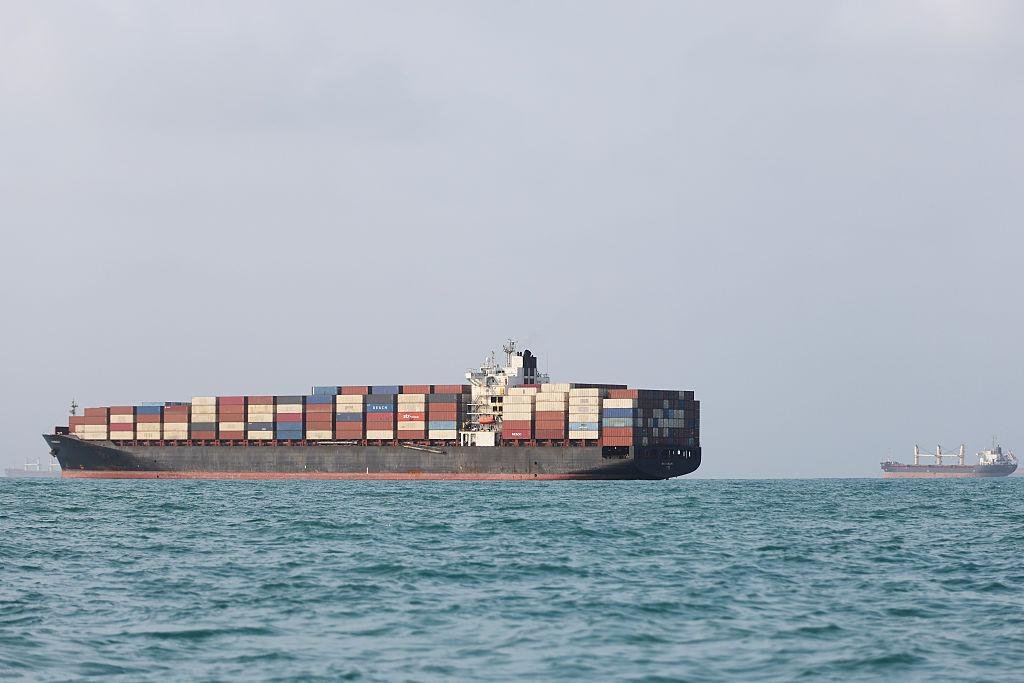
Fire Engulfs Cargo Vessel
A Singapore-registered container ship sank in the Strait of Hormuz after being struck and catching fire, intensifying concerns over the safety of commercial shipping through one of the world’s most strategically important maritime corridors.
The vessel, GFS Pride, was sailing through the strait on October 13 when it sustained damage and caught fire. All 21 crew members were safely evacuated, and no injuries were reported by Singapore’s Maritime and Port Authority.
The cause of the strike remains contested. Singaporean authorities reported that the ship was hit by an unidentified projectile, while Iran’s Revolutionary Guard naval forces said a cargo vessel had sunk after striking a naval mine. Available reports do not conclusively establish whether those accounts describe the same mechanism.
A Critical Shipping Route Under Pressure

The Strait of Hormuz connects the Persian Gulf with the Gulf of Oman and the wider Indian Ocean. Before the current conflict, roughly one-fifth of global oil and liquefied natural gas trade passed through the waterway, making its security central to energy markets and international commerce.
The sinking comes amid a wider series of maritime incidents involving commercial vessels. Another Singapore-registered ship, GFS Giselle, was reported damaged by a separate strike but reached a safe anchorage. A separate bulk carrier, Cape Dao, was also reported to have sunk after an earlier attack.
The incidents underline how security risks are extending beyond oil tankers to container ships and other commercial vessels.
Risks for Energy and Global Trade
A prolonged disruption in the strait could increase shipping insurance premiums, force operators to reconsider routes and raise freight costs. Longer journeys can also increase fuel consumption and delay deliveries, adding pressure to supply chains.
Energy markets are particularly exposed. Even without a complete closure, repeated attacks can increase the risk premium attached to oil and gas shipments. The ultimate price impact depends on the duration of the disruption, the volume of cargo delayed and whether alternative supply routes can compensate.
What Happens Next
The immediate priorities are establishing the circumstances of the sinking, assessing threats to nearby vessels and determining whether commercial traffic can continue safely.
For shipowners, insurers and energy traders, the key question is whether this remains a series of isolated incidents or signals a sustained threat to transit through the strait. Further attacks could increase costs across maritime trade, while a credible improvement in security could help ease pressure.
The sinking of GFS Pride is a reminder that geopolitical risk can quickly become a commercial problem, affecting shipping schedules, insurance costs and the movement of energy and goods worldwide.
Sources
- Bloomberg — Cargo Ship Sinks in Strait of Hormuz After Strike Triggers Fire
- Reuters — Two Singapore-Registered Vessels Struck in Strait of Hormuz; One Sinks
- Reuters — Two Ships Sink Near Hormuz After Being Hit by Projectiles
- Associated Press — Iran Says a Ship Sank After Striking a Mine in Strait of Hormuz
- Seatrade Maritime — Singapore Confirms Container Ship Sank in Hormuz Amid Fresh Attacks