The interiors of 1990s performance cars are gaining renewed attention in 2026 as collectors and younger enthusiasts increasingly value tactile design, analog controls and character-rich cabins over today’s screen-heavy cockpits.
A recent Autoevolution feature highlighted five standout sports car interiors from the decade: the Toyota Supra (A80), Aston Martin V8 Vantage Le Mans V600, TVR Cerbera, McLaren F1 and Lamborghini Diablo. The selection reflects a broader market shift in which interior design is becoming nearly as important as horsepower in collector values. (autoevolution)
During the 1990s, automakers were transitioning from purely mechanical cars into early digital systems, yet most cabins still retained physical switches, deeply sculpted dashboards and driver-focused ergonomics. That balance is now seen as a golden era between old-school simplicity and modern complexity.
Supra and McLaren Represent Opposite Ends of Driver Focus
The Toyota Supra’s cockpit has become iconic for its wraparound dashboard, angled center stack and aviation-inspired layout. Enthusiasts often compare it to a fighter-jet cockpit, reinforcing the model’s cult status in global collector markets. (autoevolution)
At the ultra-premium end, the McLaren F1 remains one of the most celebrated interiors ever created. Its central driving seat flanked by two passenger seats created a race-car-like experience unmatched even today. More than three decades later, it remains a benchmark for purposeful supercar packaging. (autoevolution)

British Cars Brought Craftsmanship and Individuality
The Aston Martin V8 Vantage Le Mans V600 represented the luxurious side of 1990s performance design, pairing leather, aluminum trim and grand-touring comfort with serious power.
Meanwhile, the TVR Cerbera showcased a more eccentric British philosophy, using flowing shapes, dramatic color combinations and unusual switchgear. TVR interiors from the era are increasingly prized because no modern manufacturer builds cabins with comparable boldness. (autoevolution)
Lamborghini Diablo Defined Raw Supercar Atmosphere
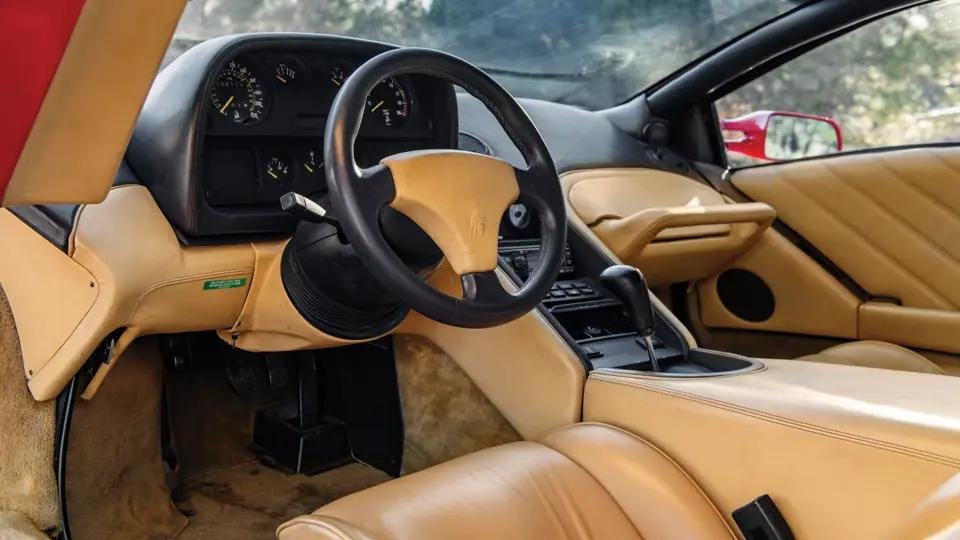
The Lamborghini Diablo offered a more traditional cockpit layout, but with dramatic low seating, heavy leather trim and the visual intensity buyers expected from an Italian flagship.
Collectors often describe the Diablo cabin as imperfect yet unforgettable — exactly the kind of emotional design many believe has disappeared in the age of software-led cars. (autoevolution)


Why It Matters Financially
Interior originality is now a major factor in auction prices. Untouched seats, factory stereos, original trim pieces and correct switchgear can significantly raise the value of 1990s performance cars.
That trend is especially strong in Japanese icons, rare British coupes and limited-production supercars.
Relevance for Europe and Slovenia
For enthusiasts in Slovenia and Central Europe, the 1990s era remains attractive because many of these vehicles are still attainable relative to newer exotics, while offering rising collectible appeal.
As emissions rules tighten and modern cars become more digitized, analog-era interiors may become even more desirable.
Bottom Line
The 1990s gave the world some of the last truly characterful sports car cabins.
In 2026, collectors are no longer buying only engines and body shapes — they are buying the feeling of sitting inside a machine built before screens took over.