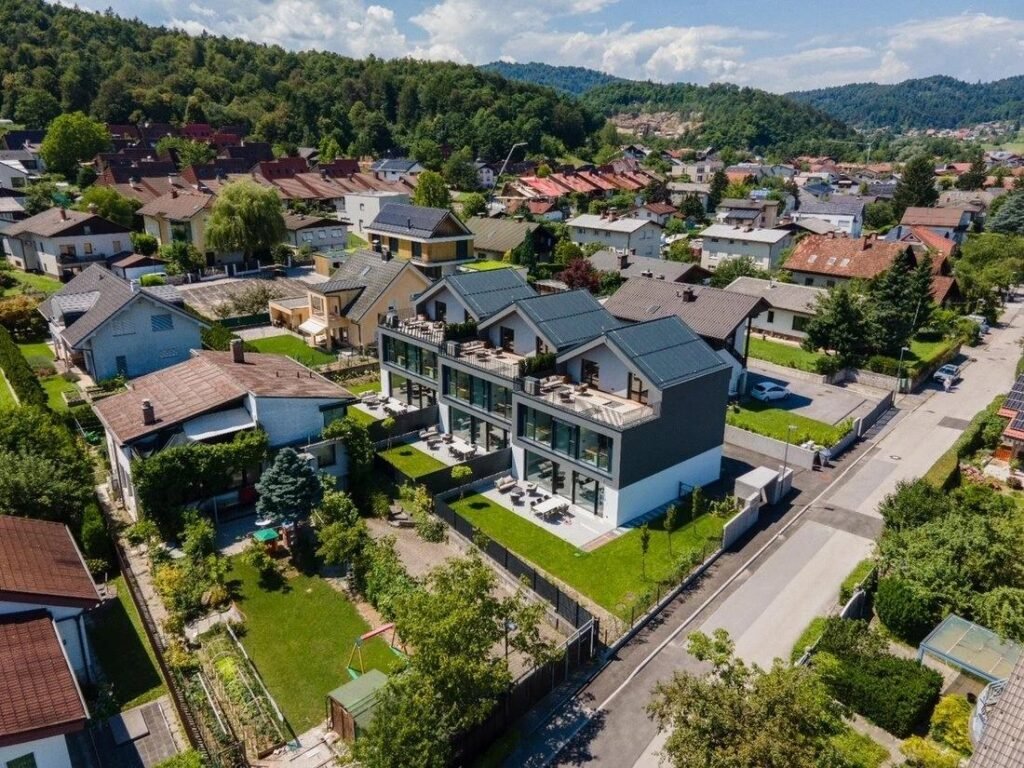
Commercial property is emerging as one of Slovenia’s more closely watched investment themes in 2026, as investors search for income-producing assets that can offer diversification, inflation protection and stronger long-term returns than traditional savings products.
A recent Siol.net market feature highlighted growing interest in business real estate as a strategic allocation for the years ahead, particularly through professionally managed real estate funds targeting Slovenia and Croatia. The report suggests institutional-style investing in property is gradually becoming more mainstream in the region. (Siol)
Unlike residential property, commercial real estate typically generates returns through rental income from offices, logistics facilities, retail assets, hotels and specialized buildings. That income component can make the sector attractive during periods of market volatility or lower bond yields.
Analysts say one of the strongest themes in Central and Southeast Europe is the shortage of modern, high-quality commercial space. In Ljubljana, vacancy rates for office space remain low, while demand for logistics and warehousing continues to benefit from e-commerce growth and regional transport links. (Siol)

That supply imbalance can support rents and asset values, particularly for newer energy-efficient buildings in prime locations. Investors are increasingly prioritizing quality over quantity, favoring assets with stable tenants and modern sustainability standards.
The logistics segment is also attracting attention. Slovenia’s strategic location between Western Europe and the Balkans, combined with the importance of the Port of Koper and regional freight corridors, gives warehouses and distribution centers growing relevance in regional portfolios. (Siol)
Retail property remains more selective. Prime shopping centers and convenience-led formats continue to draw interest, while secondary retail assets face pressure from online competition and changing consumer habits.
For investors, funds and pooled vehicles can offer easier access than direct ownership. Rather than buying an individual building, investors can gain diversified exposure across multiple assets, tenants and sectors under professional management.

For Slovenian households, the story reflects a broader shift in wealth management: real estate is no longer viewed only as apartments and houses, but increasingly as a portfolio asset class with income potential.
Risks remain, including financing costs, tenant turnover and economic slowdown. But if eurozone rates ease further and regional growth remains stable, commercial property could strengthen as a strategic medium-term investment theme.
The broader takeaway is that Slovenia’s real estate market is maturing. In 2026, commercial assets are gaining visibility as investors look beyond residential housing toward more diversified income-producing opportunities.
Sources
Siol.net – Poslovne nepremičnine kot strateška naložba prihodnjih let (Siol)