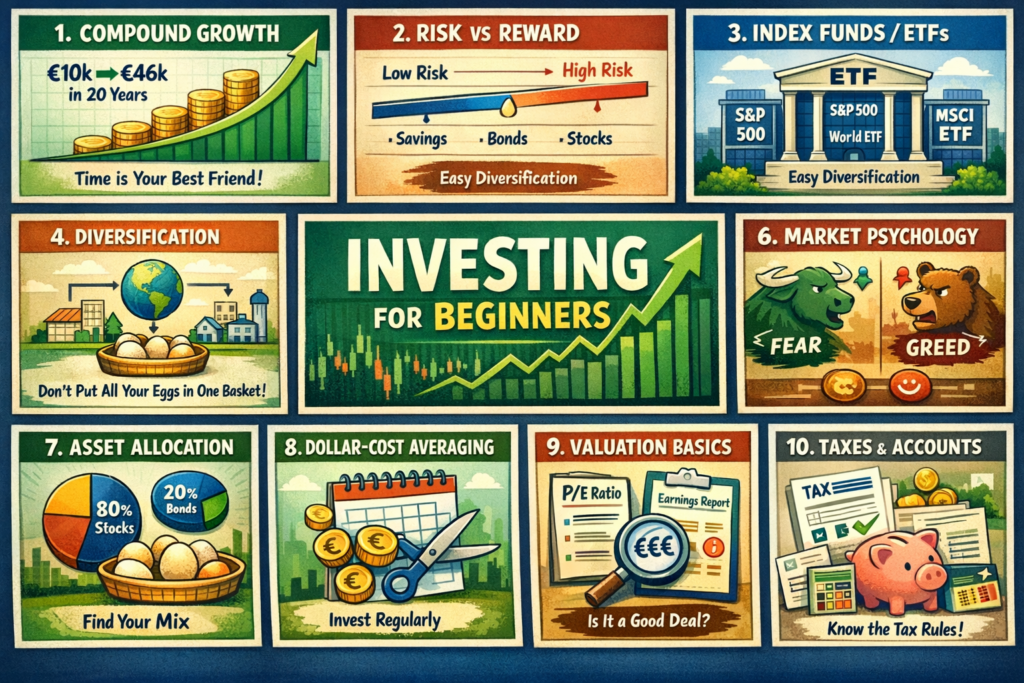
1. Compound Growth (Your Best Friend)
Understand how money grows over time when returns earn returns.
Example:
€10,000 invested at 8% yearly becomes about €46,000 in 20 years.
The biggest edge beginners have is time.
2. Risk vs Reward
Higher returns usually come with higher risk.
- Savings account = low risk / low return
- Bonds = moderate risk
- Stocks = higher risk / higher long-term return
- Crypto/speculation = very high risk
Learn to ask: What risk am I taking for this return?
3. Index Funds / ETFs
For most beginners, this is the smartest place to start.
They let you own hundreds or thousands of companies in one purchase.
Examples:
- Vanguard S&P 500 ETF
- Vanguard Total World Stock ETF
- iShares Core MSCI World UCITS ETF
Low fees + diversification = powerful combination.
4. Diversification
Never bet everything on one stock, one sector, or one country.
Spread investments across:
- Different companies
- Different sectors
- Different countries
- Different asset types
This lowers risk dramatically.
5. Fees Matter
A 1.5% yearly fee can destroy huge wealth over decades.
Learn the difference between:
- Expense ratio
- Trading fees
- Management fees
- Taxes
Low-cost investing often wins.
6. Market Psychology
Markets move on fear and greed.
You need to recognize:
- Panic selling
- FOMO buying
- Chasing hype
- Overconfidence
Controlling emotions beats predicting markets.
7. Asset Allocation
How you split money matters more than stock-picking.
Example beginner allocations:
- 80% stocks / 20% bonds
- 100% stocks (young + long horizon + risk tolerance)
- 60/40 for lower volatility
8. Dollar-Cost Averaging
Investing monthly reduces timing stress.
Example:
€300 every month into ETFs regardless of headlines.
This builds discipline and removes emotional decisions.
9. Valuation Basics
A great company can still be overpriced.
Learn:
- P/E ratio
- Revenue growth
- Profit margins
- Debt levels
- Free cash flow
Even basic valuation helps avoid hype traps.
10. Taxes & Accounts
Often overlooked but extremely important.
Learn:
- Capital gains tax in Slovenia (if applicable for you)
- Dividend taxes
- Tax-efficient accounts available locally
- Broker reporting rules
Taxes can matter as much as returns.