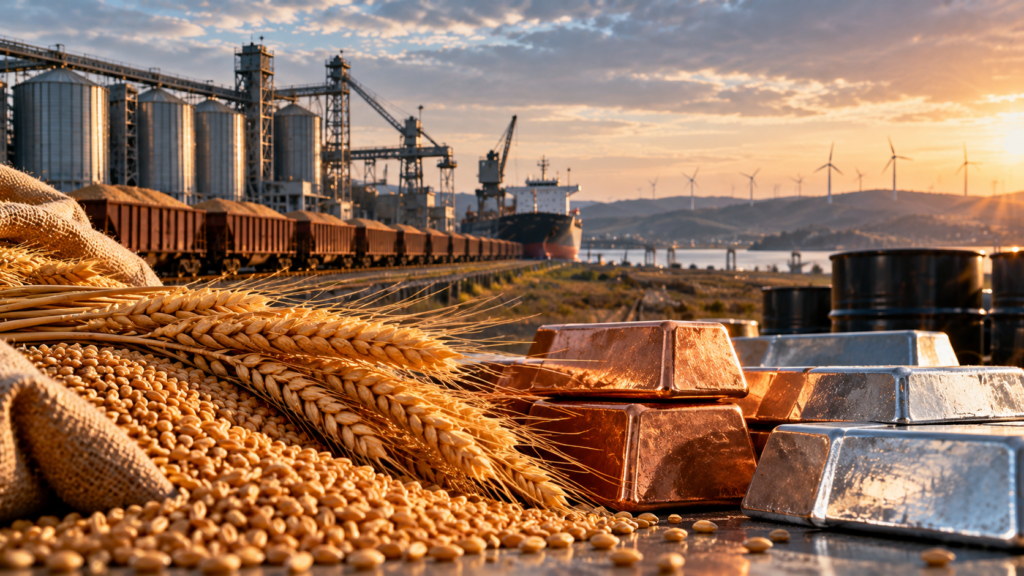
Global commodity prices are forecast to rise 23% in 2026 as geopolitical conflict, energy supply disruptions and shipping constraints drive up costs across major markets. The World Bank warns that depleted oil inventories and mounting agricultural risks could prolong inflationary pressures, complicating the outlook for economic growth and monetary policy.
◉ Energy prices lead the surge: The World Bank projects a 32% increase in energy prices in 2026, with Brent crude forecast to average around $91 per barrel, compared with $69 in 2025.
◉ Metals and precious metals climb: Metals prices are projected to rise 25%, while precious metals could gain 40% amid supply constraints, industrial demand and geopolitical uncertainty.
◉ Inflation risks extend into 2027: Food commodity prices could rise by a cumulative 18% across 2026 and 2027, while adverse weather and further supply disruptions could worsen the outlook.
Multiple Shocks Hit Commodity Markets
The World Bank’s October 28 Commodity Markets Outlook identifies an unusual combination of supply disruptions, geopolitical tensions and demand pressures. The projected 23% increase would reverse the broader decline in commodity prices seen over the previous three years.
Energy is the principal driver. The Bank expects global energy prices to increase 32% in 2026, with Brent crude averaging approximately $91 per barrel, up from $69 in 2025. Global oil supply is projected to contract by 5.2%, marking its sharpest decline in more than four decades outside the 2020 global recession. World Bank
The Middle East conflict has disrupted shipping and reduced oil inventories, leaving markets more exposed to additional supply interruptions. Meanwhile, disruptions to grain shipments in the Black Sea are increasing pressure on agricultural supply chains.
These developments illustrate how geopolitical risks can spread across interconnected markets. Higher oil prices raise transportation and production costs, while expensive natural gas and fertilizer can increase agricultural expenses. The result can be a broader rise in consumer prices, even in countries that do not directly participate in the conflicts.
Metals and Gold Gain Importance
Industrial metals are another important component of the outlook. The World Bank projects that metals prices will rise 25% in 2026, reaching a new annual high. Aluminum, copper and tin are benefiting from supply disruptions and demand linked to renewable energy, electric vehicles and data-center construction. World Bank
Precious metals prices are forecast to increase 40% this year as geopolitical and policy uncertainty sustain demand for safe-haven assets. This outlook reflects a combination of investment demand and broader concerns about economic stability.
However, the projected gains do not imply that all commodities will move in the same direction. Supply conditions, inventory levels, production costs and demand differ considerably across individual markets. Prices can also respond differently as geopolitical conditions change.
Inflation Risks Extend Into 2027
The implications reach beyond commodity producers and financial markets. Higher energy and food prices can reduce household purchasing power, compress business margins and complicate central-bank efforts to control inflation.
Food commodity prices are expected to rise by approximately 10% in 2026 and another 7% in 2027, representing a cumulative increase of about 18%. Fertilizer prices are projected to climb 14% this year before returning towards 2025 levels in 2027. World Bank
Weather presents an additional risk. The World Bank warns that a severe El Niño event, combined with further grain-shipping disruptions and escalating geopolitical tensions, could push food prices substantially above its baseline projections.
The Bank’s central forecast anticipates that overall commodity prices will decline 7% in 2027. Yet this moderation depends on assumptions about the intensity of conflicts and the persistence of supply disruptions.
For monetary policymakers, the challenge is that supply-driven inflation cannot necessarily be resolved through higher interest rates alone. Tighter financial conditions may restrain demand, but they cannot immediately restore disrupted shipping routes, replenish oil inventories or improve harvests.

What Investors Will Watch
The commodity outlook highlights three variables that will influence the next phase of market pricing: geopolitical developments, the recovery of energy supply and the resilience of agricultural production.
If disruptions ease, commodity prices could moderate as forecast. If several risks intensify simultaneously, energy and food costs could remain elevated, increasing pressure on inflation, corporate earnings and economic growth.
The broader message is that commodity markets are increasingly interconnected. Energy shortages can affect agriculture, industrial metals can transmit volatility across commodity groups, and geopolitical uncertainty can influence demand for precious metals.
The projected 23% increase is a forecast, not a guaranteed outcome. Its significance lies in the range of economic consequences that could follow if supply constraints persist across several major commodity markets at once.