OpenAI’s reported interest in Google’s artificial intelligence chips highlights a growing shift in the economics of AI infrastructure. As demand for computing power accelerates, access to alternative processors could reshape relationships between leading AI developers, chip suppliers and cloud computing providers.
◉ Google’s chip business could gain momentum: A potential OpenAI purchase would signal demand for Google’s Tensor Processing Units (TPUs) beyond its own AI ecosystem.
◉ Nvidia faces a broader competitive landscape: Greater adoption of alternative AI accelerators could diversify computing infrastructure, although the impact on Nvidia would depend on the scale and duration of any deployment.
◉ AI infrastructure economics are evolving: Access to different chips could give AI developers more flexibility in managing computing capacity, costs and dependence on individual suppliers.
Google Challenges Nvidia’s Dominance
The reported plan arrives as Google expands its Tensor Processing Unit business beyond its own data centers. TPUs were originally developed to accelerate Google’s internal workloads, but the company is increasingly positioning them as an alternative for external AI developers and infrastructure operators.
OpenAI’s reported interest is significant because it has historically relied heavily on Nvidia graphics processing units (GPUs) to train and run its models. A broader deployment of Google’s chips could give OpenAI another source of computing capacity while creating a commercial opportunity for Google’s semiconductor operations. The companies compete in AI products, making the potential infrastructure relationship particularly notable. Reuters
The development also reflects a wider industry trend: major AI companies are seeking to diversify their hardware supply, improve computing economics and reduce dependence on a single architecture.
The Economics of AI Chips
The competition between GPUs and TPUs is not simply a comparison of chip specifications. It involves software compatibility, networking, power consumption, availability and the cost of operating large computing clusters.
Nvidia benefits from its established ecosystem of hardware, networking technology and software tools. Google’s TPUs offer an alternative designed specifically for AI workloads, with performance and efficiency depending on the model, software stack and application.
For OpenAI, adopting another chip architecture could introduce engineering costs. Models and infrastructure often require optimization to run efficiently on different hardware. The financial benefit would therefore depend on whether improved capacity, pricing or performance outweighs integration and operating expenses.
The strategic implication extends to cloud computing. Google can potentially generate additional revenue by selling or supplying access to chips it developed for internal use. This creates another way to monetize its AI infrastructure investments, beyond subscriptions, advertising and cloud services.
Nvidia’s Competitive Position
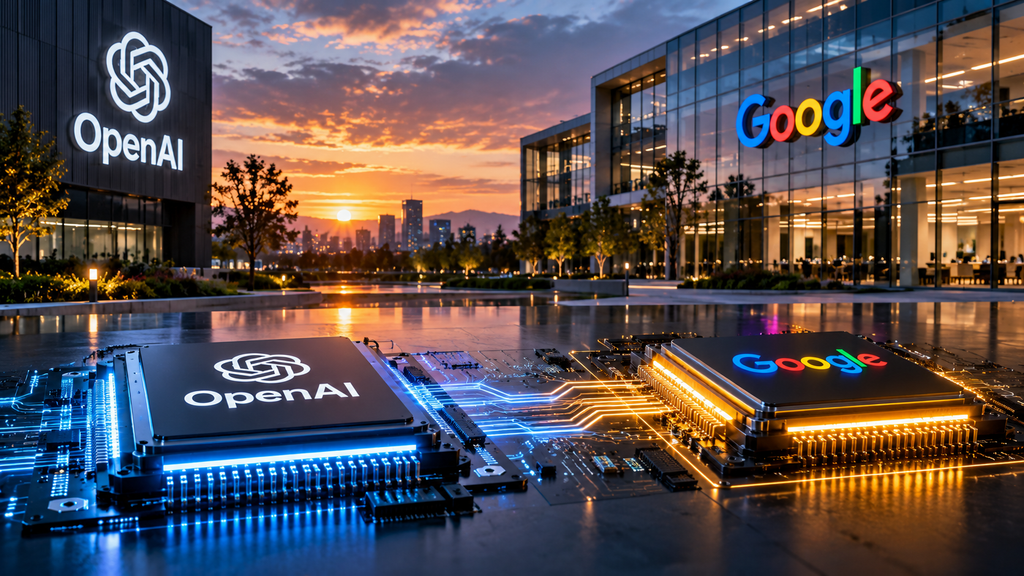
A potential OpenAI purchase would not automatically threaten Nvidia’s market leadership. The scale of any purchase, the workloads involved and the pace of deployment remain unclear. Nvidia’s broad software ecosystem and established customer relationships are important competitive advantages.
Nevertheless, the direction of travel matters. If large AI developers increasingly use multiple chip architectures, computing demand could become distributed across a wider group of suppliers. That could influence future pricing, infrastructure investment and expectations for semiconductor growth.
Google is also expanding its external TPU distribution through additional infrastructure partnerships, reinforcing the possibility that its chips could become a more significant part of the AI computing market.
What Investors Will Watch
The reported purchase remains unconfirmed by the companies, and financial terms have not been disclosed. Its commercial significance will depend on whether the plan develops into a substantial deployment and whether Google can turn growing interest into recurring revenue.
Investors will be watching Google’s ability to monetize AI infrastructure, OpenAI’s progress in diversifying its computing supply, and Nvidia’s ability to maintain its position as alternatives expand.
The broader story is about control over the infrastructure underpinning artificial intelligence. As AI models become more demanding, the companies that provide computing capacity—and do so at competitive cost—could capture an increasingly important share of the value created by the industry.