The artificial intelligence boom is creating opportunities well beyond the companies developing large language models and advanced chips. In India, telecommunications and optical-fibre manufacturer HFCL has reported a sharp increase in quarterly revenue and profit, highlighting how demand for data-centre infrastructure can translate into financial results for suppliers further down the technology supply chain.
HFCL reported second-quarter revenue of ₹2,541.79 crore, up 143.6% year on year, while net profit climbed 448.1% to ₹394.22 crore. EBITDA rose 223.6% to ₹658 crore.
The results put the spotlight on a less visible part of the AI investment cycle: the physical networks required to move data between servers, data centres and users.
AI Data Centres Are Creating Demand for Optical Fibre
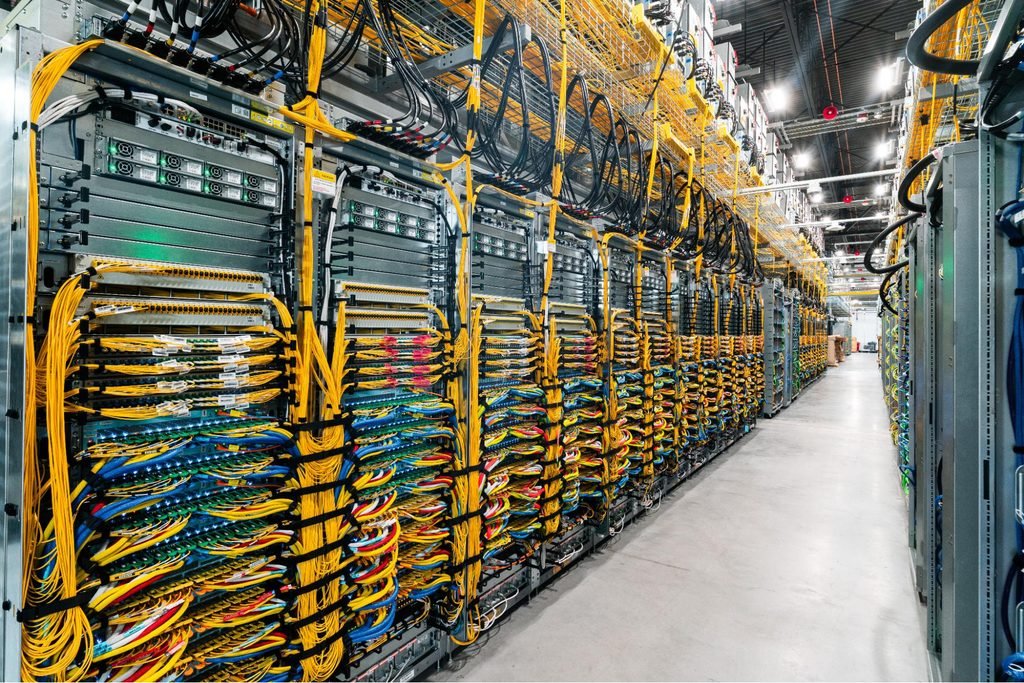
Artificial intelligence depends on more than processors and servers. Data centres also require high-capacity optical-fibre networks to transfer enormous volumes of information between computing systems, storage infrastructure and external networks.
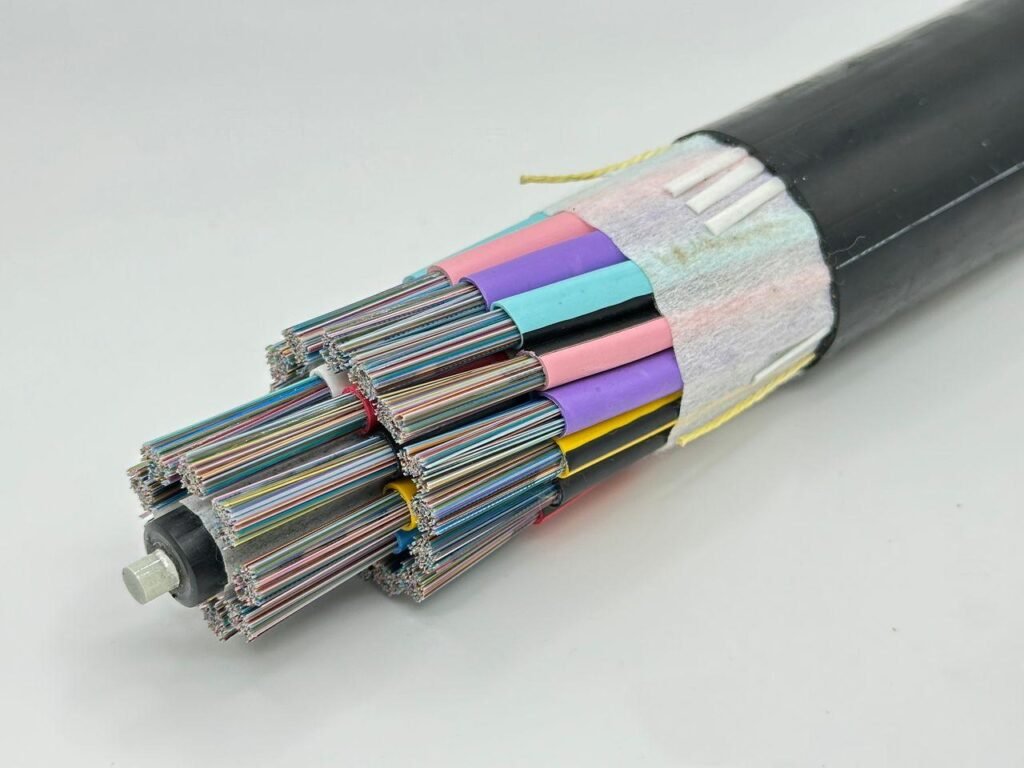
As operators expand facilities for AI training and inference, demand is growing for high-fibre-count cables and connectivity products designed to handle increasingly data-intensive workloads. Telecom operators are another source of demand as they upgrade networks and expand broadband infrastructure.
HFCL operates across optical fibre, optical-fibre cables, telecom products and related digital infrastructure. That gives the company exposure to several parts of the connectivity market rather than to AI software alone.
The distinction matters for investors. The AI investment cycle creates opportunities for suppliers throughout the infrastructure chain, but each business has its own capacity constraints, competitive pressures and ability to convert demand into profitable orders.
A Large Order Book Provides Visibility — Not a Guarantee
HFCL reported an order book of approximately ₹28,911 crore, giving the company a substantial pipeline of contracted work to execute. It has also outlined investment plans of around ₹1,800 crore to expand manufacturing capacity across optical fibre, cable and preform production.
The order book is an important indicator of demand, but it should not be treated as revenue already earned. Delivery schedules, customer requirements, manufacturing capacity and contract terms all influence when orders are recognised as sales.
Capital expenditure also brings execution risks. New capacity must be commissioned, production must meet quality requirements, and additional output must generate sufficient returns to justify the investment.
For investors, the next test is whether the company can maintain its stronger margins while scaling production and delivering its order pipeline.
What the Results Mean for the AI Investment Cycle
HFCL’s results illustrate how AI-related investment can benefit businesses that receive less attention than the largest technology companies.
The companies building AI infrastructure need fibre-optic connectivity, power systems, cooling, networking equipment and data-centre facilities. Suppliers in these areas can benefit when spending expands across the industry.
However, the opportunity is not risk-free. Strong demand can attract new competitors and encourage capacity expansion across the sector. If supply eventually catches up with demand, pricing power may weaken. Companies can also face customer concentration, project delays and fluctuations in raw-material costs.
The central investment question is therefore not simply whether AI infrastructure spending will continue to grow. It is whether individual suppliers can sustain profitable growth as the market expands.
What Investors Should Watch Next
- Revenue growth: Whether the latest increase continues in subsequent quarters.
- Profit margins: Whether improved profitability can be sustained as production expands.
- Order execution: How quickly the ₹28,911 crore order book converts into recognised revenue and cash flow.
- Capital expenditure: Whether planned investment generates sufficient additional production and returns.
- International demand: Whether export orders and overseas data-centre projects continue to support growth.
- Valuation: Whether the share price already reflects a significant portion of expected future growth.
The Bottom Line
HFCL’s latest results provide a concrete example of AI infrastructure demand translating into sharply higher sales and profits at an Indian optical-fibre and telecommunications supplier.
Revenue increased 143.6%, net profit rose 448.1%, and the company reported a substantial order book. Those figures point to strong business momentum, while the planned manufacturing investment suggests management is preparing for further demand.
The longer-term question is whether this growth can be sustained through successful order execution, disciplined investment and resilient margins. Strong quarterly results alone do not establish that a stock is attractively valued.
This is a business worth watching as the AI infrastructure cycle develops, but investors should assess its valuation, risks and future cash generation alongside its headline growth figures.