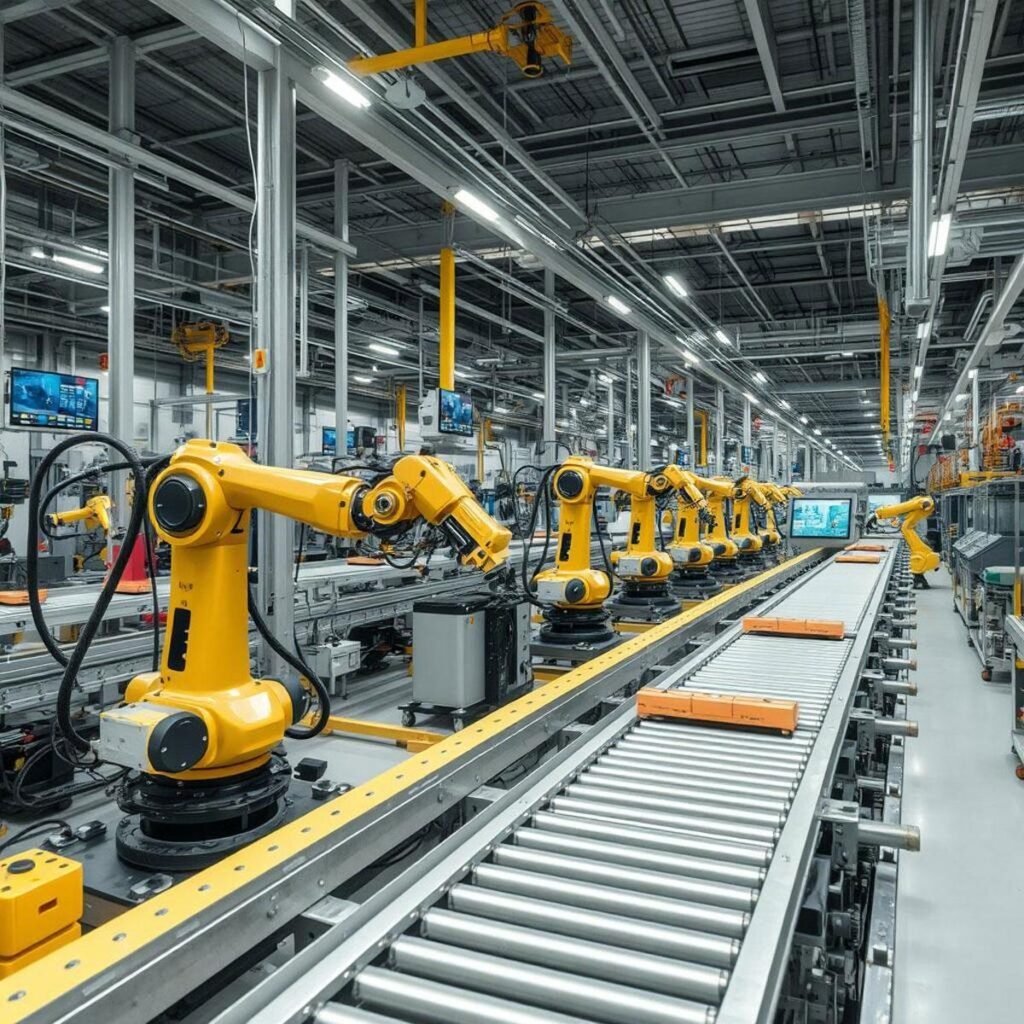
Siemens is targeting a dramatic increase in factory automation, aiming to raise automation levels to as much as 80% as artificial intelligence becomes more deeply embedded in industrial production. The German engineering group believes AI-driven manufacturing could help companies maintain competitiveness in high-cost economies while transforming how factories operate.
Speaking at Siemens’ electronics factory in Erlangen, Germany, on 19 October, executive board member Cedrik Neike said manufacturers need annual productivity improvements of 7% to 9% to remain competitive. Siemens aims to increase factory automation from approximately 30%–40% today to 70%–80%.
The initiative reflects a broader shift in industrial strategy: AI is moving beyond office-based applications and into the machinery, production systems and operational decisions that determine manufacturing output.
AI Moves From Digital Models to Factory Floors
Siemens is working with NVIDIA on physical AI applications that combine artificial intelligence, industrial software and digital twins. These technologies allow manufacturers to model production processes virtually, test potential changes and optimise factory operations before implementing them in physical environments.
Digital twins can help engineers identify bottlenecks, simulate production changes and evaluate equipment configurations without relying exclusively on expensive physical testing. AI can then support more adaptive production planning, helping factories respond to changing demand, product variations and operational constraints.
In its announcement on 19 October, Siemens said its latest solutions include virtual production ramp-ups that can reduce engineering effort by up to 85%, alongside agent-based production planning designed to improve adaptability and reduce costs.
These are company-reported potential benefits rather than guaranteed results for every factory. Actual performance will depend on the complexity of the production environment, data quality, integration costs and the effectiveness of deployment.
A €500 Million Investment in Industrial AI
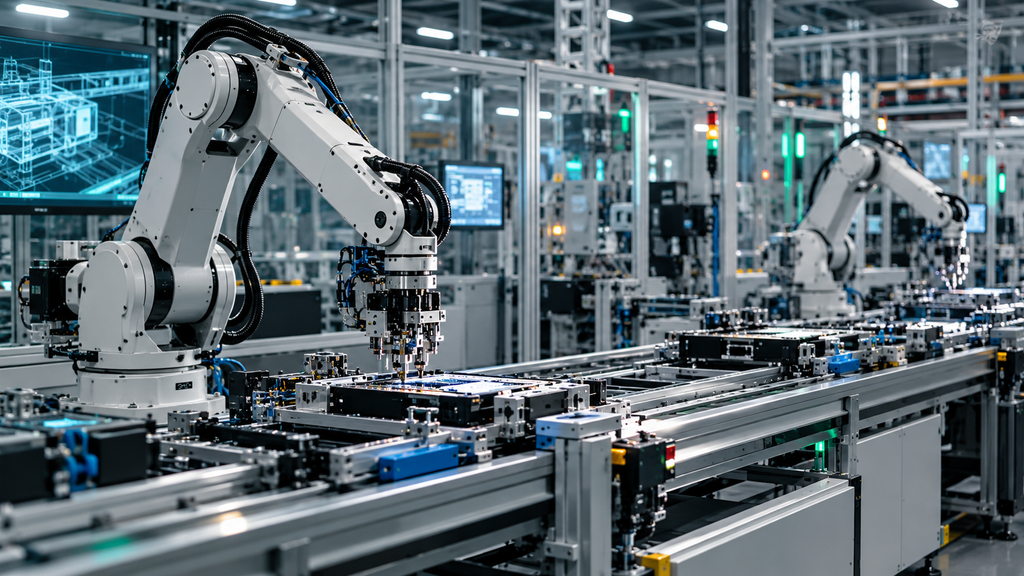
Siemens plans to invest €500 million to expand its Erlangen electronics facility by 2030, with the site intended to serve as a showcase for AI-powered manufacturing.
The investment illustrates how industrial automation is becoming a strategic priority rather than simply a means of reducing manual tasks. Manufacturers are under pressure to improve output, manage labour and energy costs, and compete with producers operating under different economic conditions.
For Germany and other high-cost manufacturing economies, productivity growth is particularly important. AI-enabled automation could help companies maintain production locally by increasing efficiency and allowing workers to focus on more complex tasks.
However, the transition also requires capital expenditure, employee training, reliable industrial infrastructure and the integration of AI into existing production systems. The pace of adoption is likely to vary significantly between industries and individual manufacturers.
Why Robotics and Industrial Software Could Benefit
The expansion of AI-powered factories creates opportunities across several interconnected technology markets.
Industrial automation suppliers could benefit from demand for control systems, sensors, robotics, machine vision and connected manufacturing equipment. Software providers may also gain as businesses invest in simulation, digital twins, industrial data platforms and AI-assisted production management.
The opportunity extends beyond companies manufacturing physical robots. A highly automated facility also depends on software capable of coordinating equipment, analysing operational data and connecting production systems with planning and engineering workflows.
Nevertheless, higher automation targets do not automatically translate into equivalent increases in supplier revenue. Purchasing decisions will depend on investment budgets, deployment timelines, customer returns and the competitive position of individual vendors.
NVIDIA and Siemens Strengthen the Physical AI Opportunity
The Siemens–NVIDIA collaboration highlights the growing connection between advanced computing and industrial engineering.
NVIDIA brings AI computing technologies and software capabilities, while Siemens contributes industrial automation expertise, engineering software and established manufacturing relationships. Their collaboration aims to bring AI into real production environments rather than limiting it to digital demonstrations.
For investors, this creates a potential growth area spanning industrial technology, semiconductors, automation equipment and enterprise software. It also demonstrates why AI adoption should be evaluated across the wider supply chain, rather than through software companies alone.
The key question is whether industrial AI can produce repeatable productivity improvements that justify the cost of implementation. Wider commercial adoption will depend on measurable results, interoperability and the ability to deploy solutions across multiple facilities.
What Investors Should Watch
Siemens is the central listed company in this development, while NVIDIA provides exposure to the computing infrastructure supporting the collaboration.
Investors following the industrial automation theme should monitor several indicators:
- Automation spending: whether manufacturers increase investment in robotics, sensors and production-control systems.
- Software adoption: whether digital twins and AI-assisted planning move from pilot projects into large-scale deployment.
- Productivity results: whether companies demonstrate sustained efficiency gains that justify implementation costs.
- Commercial execution: whether Siemens and NVIDIA can expand their solutions beyond showcase facilities.
- Capital expenditure: whether industrial customers maintain spending despite economic uncertainty.
The distinction between technological potential and financial performance remains important. Announced productivity targets and investment plans indicate strategic direction, but their long-term financial impact will depend on execution and customer adoption.
The Bottom Line
Siemens’ ambition to automate up to 80% of factory operations signals a significant step in the industrial application of AI. Its collaboration with NVIDIA, combined with a planned €500 million investment in Erlangen, positions the company to demonstrate how digital twins, AI and automation can work together in real manufacturing environments.
For the broader market, the development reinforces the investment case for industrial technology, robotics and manufacturing software. The next phase will depend on whether these systems deliver measurable productivity improvements at a scale that makes widespread adoption commercially attractive.