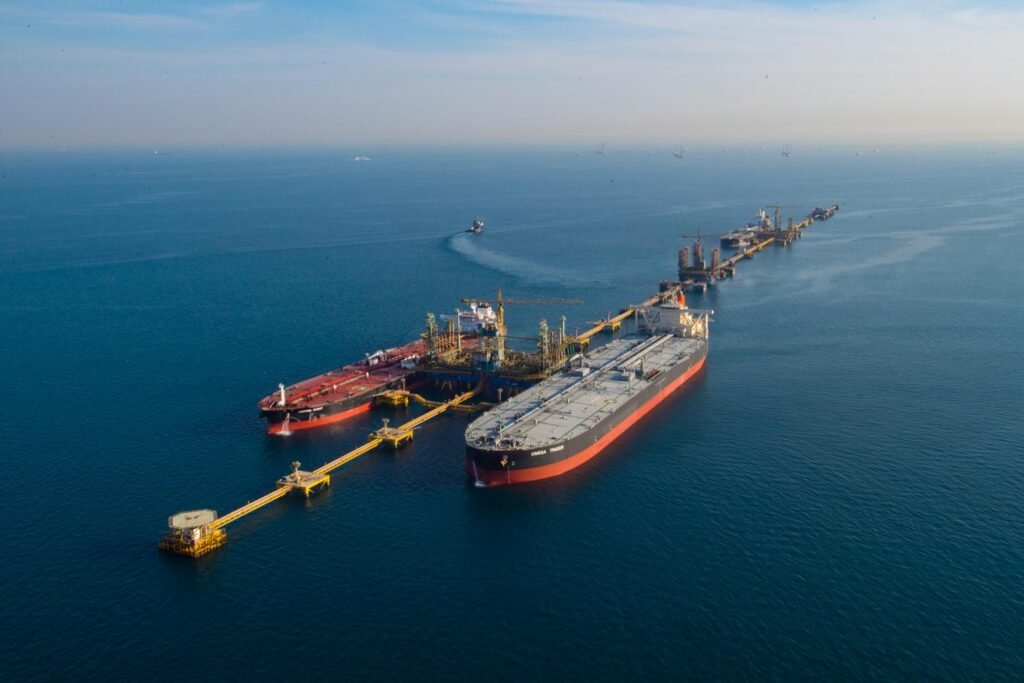
A pullback in oil prices gave global markets some breathing room on Monday, as US stock futures moved higher and Asian equities delivered a mixed performance. The move offered investors temporary relief from energy-cost concerns ahead of a busy week of corporate earnings, but it did not remove the broader risks facing financial markets.
Investors are balancing lower oil prices against uncertainty over geopolitical supply disruptions, the scale of spending on artificial intelligence and whether major companies can deliver earnings growth to justify their valuations.
Oil Prices Ease, but Supply Risks Remain
Oil prices fell more than 2% in early trading, with Brent crude declining to around $107.16 a barrel and US benchmark crude trading near $96.84. The retreat followed a US decision to delay the implementation of broad new sanctions on Russian energy, raising the possibility of additional supply reaching global markets.
The decline offered some relief to investors concerned about the inflationary impact of expensive energy. Lower oil prices can reduce transport, manufacturing and operating costs, while potentially easing pressure on household budgets.
However, the wider supply outlook remains uncertain. Tensions in the Middle East and risks to shipping through the Strait of Hormuz continue to leave energy markets vulnerable to renewed price swings. Oil also remains elevated relative to levels seen before the latest geopolitical disruptions.
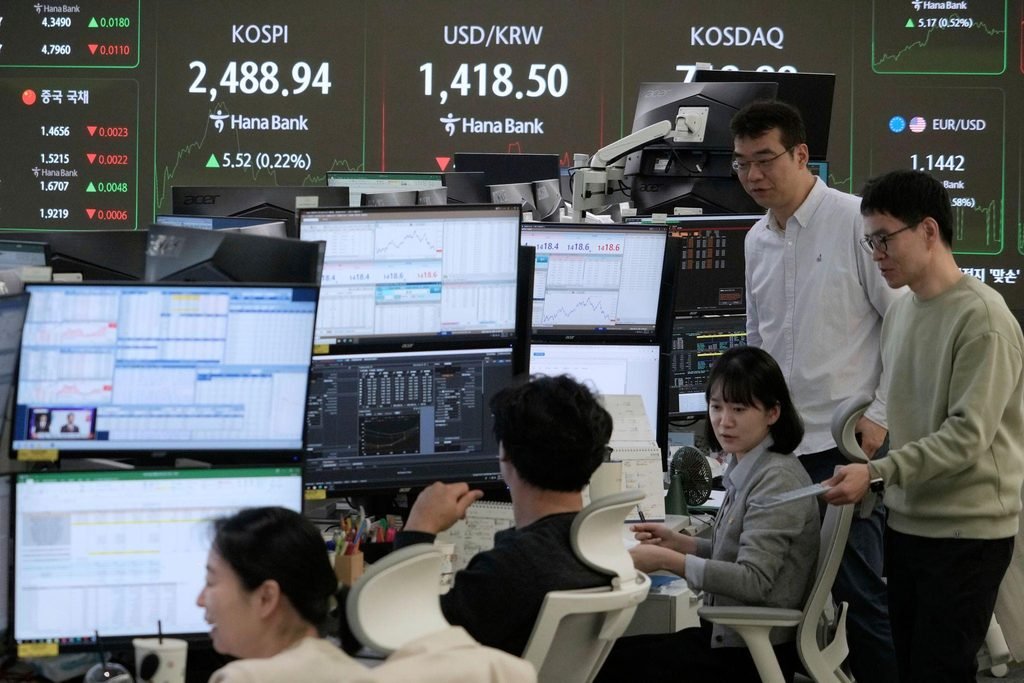
Asian Markets Deliver a Mixed Performance
Asian equities moved in different directions as investors reassessed technology valuations and the outlook for corporate earnings.
South Korea’s rebound followed a difficult period for technology stocks, while Japanese shares remained under pressure from losses in chip-related companies. The contrasting performances underline how regional markets can respond differently to the same global forces.
Wall Street Looks Ahead to Earnings
US equity futures moved higher as investors prepared for another important week of corporate results. Major companies scheduled to report included Meta Platforms, Netflix, General Motors, Tesla and IBM. Their updates could offer fresh evidence about consumer demand, business investment and the durability of earnings growth.
Technology remains a central focus. Investors are increasingly scrutinising whether the revenue generated by artificial intelligence products will justify the enormous investment required for data centres, chips and computing infrastructure.
This creates a difficult balance for markets. Strong earnings and credible AI monetisation could help restore confidence, while higher spending without a corresponding improvement in returns could renew pressure on valuations.
Why Lower Oil Does Not Guarantee a Market Rally
Energy prices are only one part of the market equation. Falling oil can help reduce inflationary pressure and support companies that consume significant amounts of fuel. But its effect is not uniform: energy producers may face lower revenue expectations, while other businesses could benefit from reduced operating costs.
The relationship with interest rates is also important. If lower oil prices translate into softer inflation, investors may become more optimistic about future rate cuts. If inflation remains elevated for other reasons, that relief could be limited.
At the same time, equity markets must contend with corporate earnings expectations, government bond yields, geopolitical uncertainty and concerns about AI investment returns. A one-day decline in oil prices is therefore not enough to establish a durable change in market direction.
What Investors Should Watch This Week
- Brent and US crude: Whether the decline continues or supply concerns push prices higher again.
- US earnings: Revenue growth, profit margins and guidance from major technology and industrial companies.
- AI capital expenditure: Whether spending plans are supported by stronger demand and expected returns.
- Bond yields: Whether energy-price relief translates into lower inflation expectations and borrowing costs.
- Asian technology stocks: Whether the Korean rebound spreads to other chipmakers and regional markets.
- Geopolitical developments: Changes in Russian energy exports and risks affecting Middle Eastern supply routes.
The Bottom Line
Lower oil prices gave markets a measure of relief on 19 October, helping US futures rise while Asian stocks traded unevenly. But the move comes against a backdrop of persistent energy-supply uncertainty and growing scrutiny of AI-related investment.
The next direction for markets may depend less on one session’s oil-price move than on whether corporate earnings validate current valuations and whether energy costs ease without fresh geopolitical disruptions.
For investors, this is a reminder that short-term market rebounds can coexist with significant underlying risks.