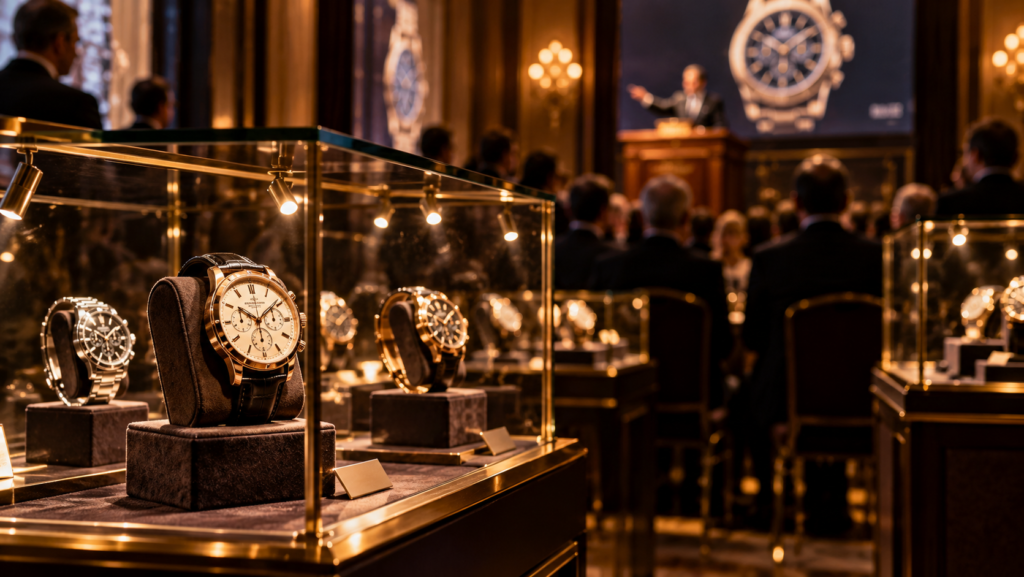
Short description: Scotch whisky distillers are turning bottles, decanters and presentation cases into works of art, seeking to attract wealthy collectors in a luxury market where design and provenance can command premiums. But elaborate packaging does not guarantee lasting resale value, particularly as the wider collectible-whisky market faces pressure.
◉ Packaging is part of the luxury product: Bespoke glasswork, artist collaborations and limited-edition presentation can make a release more distinctive and desirable to collectors.
◉ Scarcity and provenance still matter: A striking bottle can attract attention, but age, distillery reputation, production numbers and verifiable history remain central to exceptional auction prices.
◉ Collectible does not mean consistently profitable: The broader whisky auction market has cooled from its 2022 peak, showing that premium design cannot insulate every release from falling demand.
When the Bottle Becomes the Product
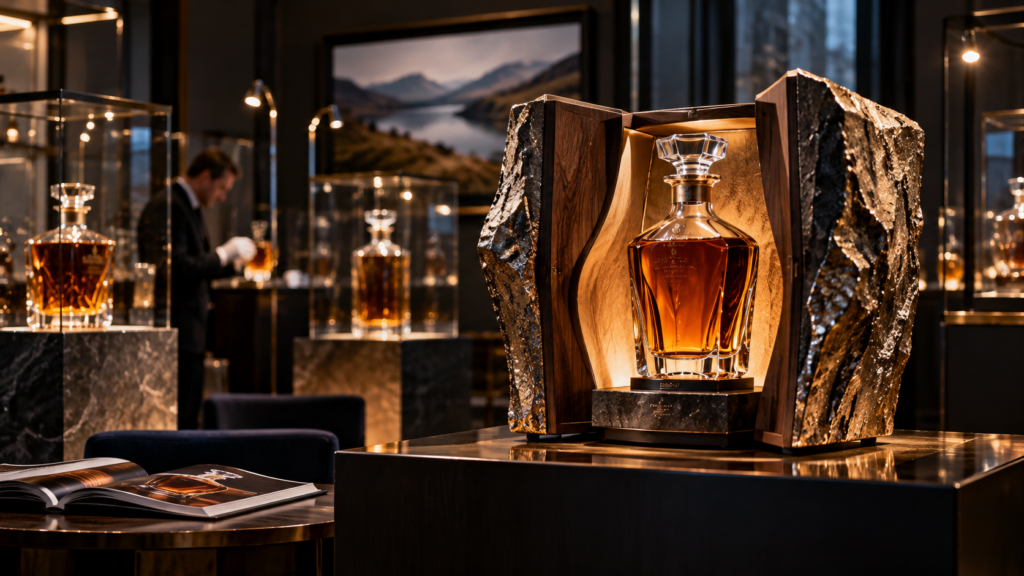
In the luxury Scotch market, the bottle is increasingly part of the experience being sold. Distillers are collaborating with artists, glassmakers, sculptors and luxury designers to create releases that resemble collectible artworks as much as traditional spirits packaging.
The strategy changes how a premium whisky is presented. A bespoke crystal decanter, sculptural display case or artist-designed label can give a release a distinctive identity, make it more recognisable at auction and create a physical object that collectors may want to display rather than consume.
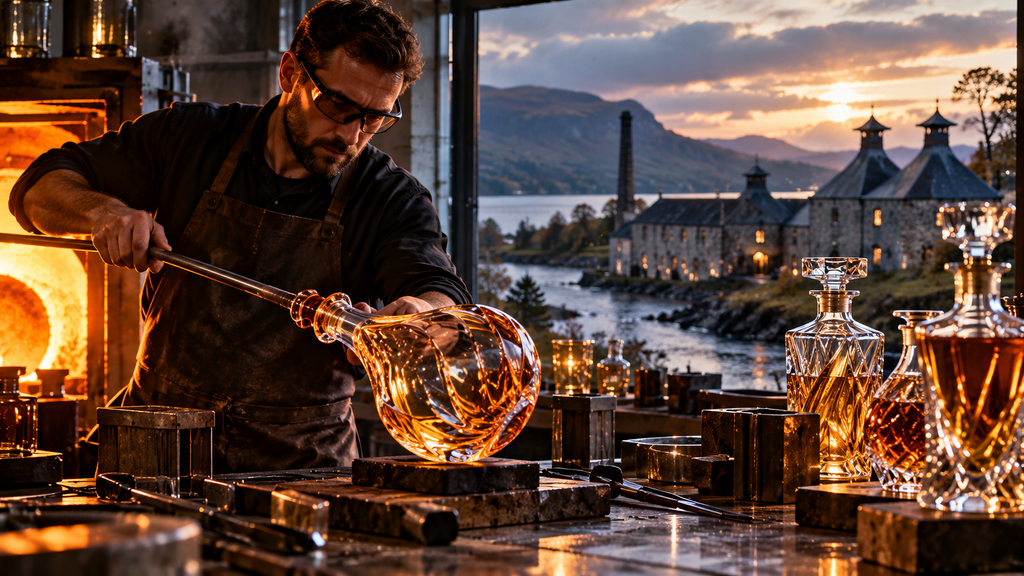
The approach is not entirely new, but it has become more sophisticated. The Macallan’s collaboration with French crystal maker Lalique, for example, produced a series of limited-edition decanters that have attracted collectors as complete sets. Other distillers have commissioned unusual glass sculptures and presentation cases for one-off releases.
The commercial logic is straightforward: when the liquid is already rare, presentation can help distinguish one release from another. Packaging becomes part of the product’s story, connecting craftsmanship, brand heritage and scarcity.
The Premium for Presentation
Exceptional auction results demonstrate how far collectors can go when rarity and presentation converge. In October 2026, a bottle of The Macallan 1926 Fine & Rare sold for approximately $2.8 million at a Sotheby’s auction held at the distillery. The result reflected the whisky’s extraordinary age, scarcity and historical significance, rather than packaging alone.
Artist collaborations can nevertheless influence the appeal of individual releases. At the Distillers One of One auction, unusual decanters and bespoke cases have helped turn rare whisky into a category that overlaps with contemporary art and luxury design.
The Glenlivet’s Spira 60 Year Old, presented in a sculptural decanter, achieved £650,000 at auction, while Old Pulteney’s Polaris, featuring bespoke glasswork and a distinctive presentation, sold for £62,500. Such results show that presentation can become a meaningful part of a release’s identity.
But the relationship is not automatic. Elaborate packaging can increase production costs without guaranteeing a higher resale price. The eventual result depends on the particular whisky, the number of examples produced, collector interest and the credibility of the story behind the release.
A Collectibles Market Under Pressure
The timing is important because the wider whisky-collectibles market has become more selective.
Research published by DramX in September 2026 found that auction prices had retreated from their 2022 peak. Its analysis of millions of auction lots indicated that the typical bottle had lost value over the period, with limited-edition releases among those facing notable declines.
This creates a distinction between the headline-grabbing trophy segment and the broader market. A historically important bottle with documented provenance may attract international bidding, while a newer release marketed primarily through exclusivity and packaging can struggle to maintain its original price.
For distillers, that places greater importance on authenticity. Collectors may appreciate an elaborate case, but they still need reasons to believe that the underlying whisky is exceptional and that future buyers will value the same qualities.
What Collectors Are Paying For
The market value of a luxury whisky release is built from several overlapping factors:
- Rarity: A genuinely limited release has a finite supply, although scarcity alone does not guarantee demand.
- Provenance: Verified ownership, distillery documentation and a clear history can support confidence in authenticity.
- Liquid quality and age: The whisky itself remains central to its identity and appeal.
- Brand reputation: Established names can attract a wider international collector base.
- Presentation: Distinctive glasswork, artist collaborations and carefully designed cases can add appeal and help differentiate a release.
The strongest releases bring these elements together. Packaging is most commercially effective when it reinforces the whisky’s identity rather than serving as a substitute for rarity, quality or provenance.
Luxury Design Meets Market Reality
For Scotch producers, creative packaging offers a way to differentiate premium products in a crowded luxury market. It can also create opportunities for partnerships with artists and craftspeople, while turning a limited release into an event that attracts media coverage and collector attention.
Yet the broader industry faces a more difficult environment. Weaker demand, accumulated inventories and pressure on consumer spending have encouraged producers to reconsider output and product strategies. In that setting, premium positioning may help protect margins, but it cannot eliminate market risk.
The distinction matters for the wider alternative-assets market, where rare whisky is sometimes discussed alongside art, watches and other collectibles. Unlike publicly traded securities, individual bottles can be difficult to value and sell. Auction fees, storage, insurance, authenticity and the availability of buyers all affect the economics of ownership.
The bottle may attract the first bid, but the whisky’s rarity, provenance and enduring desirability determine whether that interest lasts.
Sources
- Bloomberg — Scotch Whisky Gains Value as Distilleries Experiment With Packaging
- The Spirits Business — The Rise of Artist-Designed Bottles in Spirits
- The Scotsman — Macallan 1926 Whisky Sells for £2.1 Million
- Whisky Updates — Whisky Auction Prices Fall Back to 2016 Levels
- Financial Times — Scotland Has a Whisky Problem
- Decanter — Mixed Fortunes for Scotch Labels at Auctions
- Denarni Fokus — Editorial Disclosure & Transparency