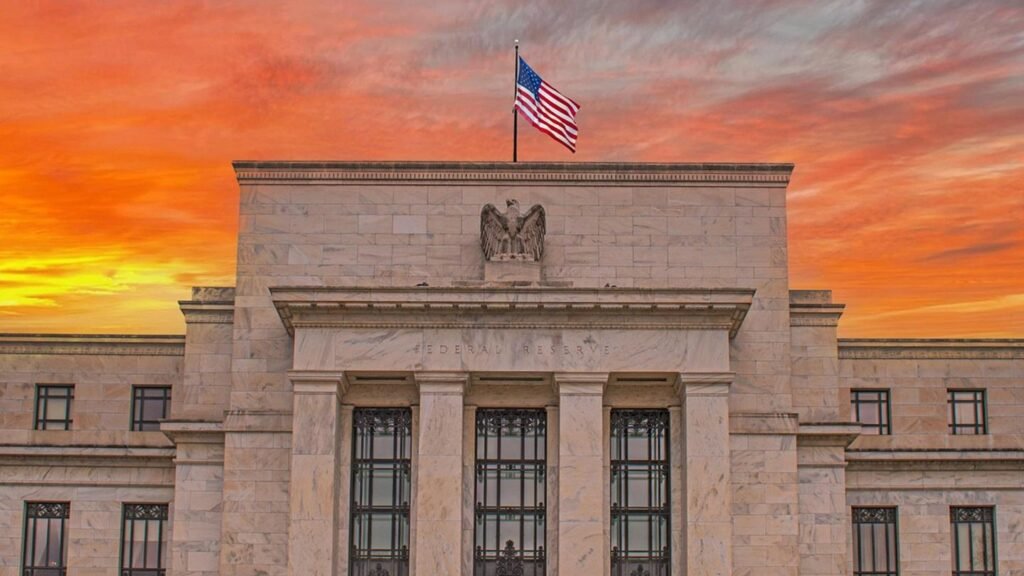
Short description: Global financial markets are approaching the Federal Reserve’s 27–28 October meeting amid rising oil prices, renewed inflation concerns and uncertainty over the future path of interest rates. Treasury yields, the U.S. dollar, gold and Bitcoin are all exposed to shifts in monetary-policy expectations, making the meeting a key event for investors assessing the balance between inflation risks and economic growth.
◉ Oil complicates the inflation outlook: Elevated crude prices risk sustaining inflationary pressures, potentially limiting the Federal Reserve’s flexibility to ease monetary policy.
◉ Treasury yields and the dollar remain central: Changes in expectations for interest rates can reshape global borrowing costs, currency valuations and demand for risk-sensitive assets.
◉ Gold and Bitcoin face different monetary forces: Gold is sensitive to real yields and the dollar, while Bitcoin can react to liquidity expectations, investor risk appetite and broader financial conditions.
The Policy Decision Behind the Headlines
The Federal Reserve’s upcoming meeting comes at a delicate moment for the global economy. Energy prices are rising, inflation remains a concern, and financial markets are reassessing how restrictive monetary policy may need to remain.
As of Friday, 23 October, market pricing indicated that investors largely expected the Federal Open Market Committee (FOMC) to leave interest rates unchanged at its 27–28 October meeting. However, expectations for a possible rate increase later in the year had strengthened following hotter-than-expected U.S. inflation data.
This distinction between the immediate decision and the longer-term policy outlook is crucial. Even if the Fed holds rates steady, its statement and Chair’s press conference could influence markets by changing expectations for the next meeting.
The central bank faces a difficult trade-off. Higher energy costs can push inflation upward even as they reduce households’ purchasing power and increase operating expenses for businesses. If inflation proves persistent, easing policy too early could undermine progress toward price stability. Yet maintaining restrictive rates for too long could weigh on investment, employment and economic growth.
The October meeting will take place before the release of the September Personal Consumption Expenditures (PCE) inflation report, scheduled for 29 October. That timing means policymakers will have to communicate their assessment without the latest reading of the Fed’s preferred inflation measure.
Markets will therefore be watching not only the rate decision but also the language used to describe inflation risks, economic activity and the conditions required for future policy changes.
Oil and the Inflation Equation
The latest oil rally has added a new layer of uncertainty to the policy outlook. On Friday, Brent crude settled at $116.72 per barrel, while U.S. West Texas Intermediate finished at $103.27.
Higher energy prices can influence inflation through several channels. Fuel and electricity costs affect households directly, while transport, logistics and production expenses can raise the prices of goods and services across the economy.
The longer these increases persist, the greater the possibility that businesses pass higher costs to customers and workers seek compensation for lost purchasing power. That can make an initially concentrated energy shock more persistent.
For the Federal Reserve, the challenge is to distinguish between a temporary increase in headline inflation and a broader change in underlying price pressures. Monetary policy cannot directly restore disrupted oil supplies, but interest-rate decisions can influence demand and financial conditions.
This creates an uncomfortable policy environment. If the Fed focuses too heavily on an energy-driven inflation spike, it risks tightening financial conditions while economic growth slows. If it treats the increase as temporary and inflation spreads more widely, it risks allowing price pressures to become entrenched.
The oil market is therefore an important part of the macroeconomic backdrop, but it does not determine the Fed’s decision by itself. The central bank must also consider employment, consumption, underlying inflation and the cumulative effects of earlier rate changes.
Treasury Yields and the Dollar
Bond and currency markets often react to changes in the expected path of monetary policy before the Fed makes a formal announcement.
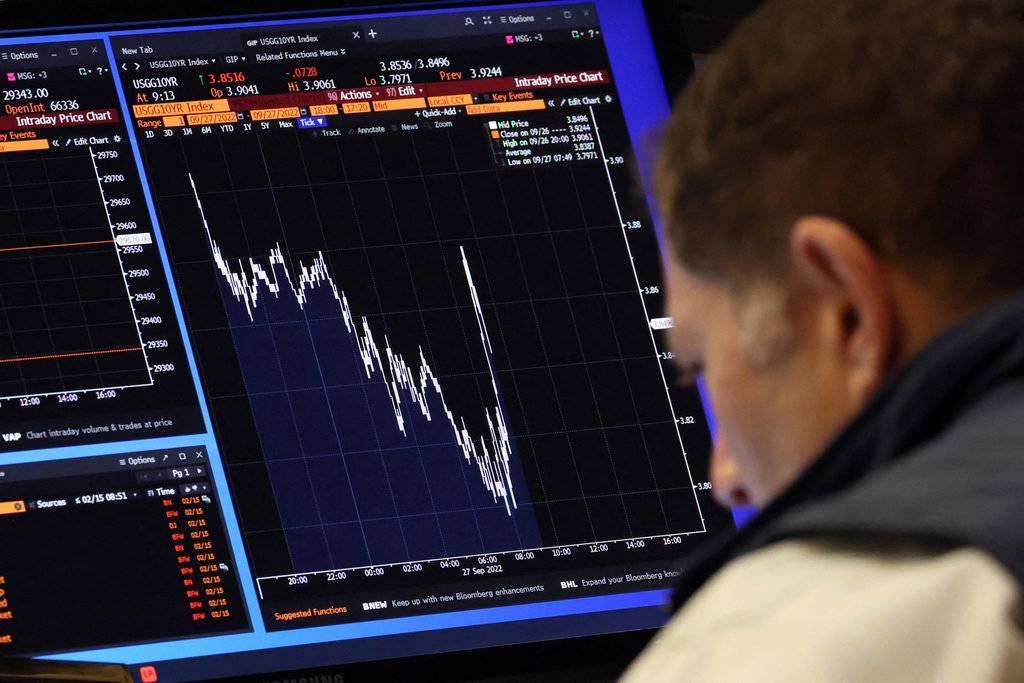
Treasury yields reflect several factors, including expectations for future short-term interest rates, inflation, economic growth and the compensation investors demand for holding longer-dated debt. When markets anticipate that rates will remain elevated, short-term yields can rise as traders adjust their expectations. Longer-term yields may also move, although their response depends on the outlook for growth and inflation.
The dollar is similarly sensitive to the relative attractiveness of U.S. interest rates. If U.S. yields rise compared with those available in other major economies, dollar-denominated assets may become more appealing to international investors. A stronger dollar can then affect global financial conditions and commodity prices.
The relationship is not automatic. Treasury yields can fall during periods of market stress if investors seek the liquidity and perceived safety of government bonds. The dollar can also behave differently depending on whether the dominant concern is U.S. inflation, global growth or geopolitical risk.
This is why the Fed’s communication may matter as much as the immediate rate decision. A hold accompanied by a warning about persistent inflation could produce a different market response from a hold that signals confidence in the existing policy stance.
For equity investors, changes in yields can alter the valuation of future earnings, particularly for companies whose expected profits lie further in the future. For borrowers, sustained higher yields can increase financing costs and complicate decisions about investment, housing and corporate expansion.
Gold’s Monetary Sensitivity
Gold is entering the Fed meeting under pressure from the interaction between rising energy prices and interest-rate expectations.
On Friday, spot gold fell below $4,000 per ounce and touched an intraday low near $3,975.23. The metal was heading for a weekly loss of approximately 4%, its steepest weekly decline since June.
Gold’s reaction illustrates the difference between geopolitical risk and monetary risk. Conflict and uncertainty can increase demand for defensive assets, but rising inflation can also strengthen expectations that interest rates will remain high or rise further.
Because gold does not generate interest income, higher real yields can increase the opportunity cost of holding it. A stronger dollar can add pressure by making bullion more expensive for buyers using other currencies.
The balance between these forces may change rapidly around a major central-bank meeting.
A more restrictive-than-expected message could reinforce the view that monetary conditions will remain tight, potentially limiting gold’s recovery. A more reassuring assessment of inflation or economic growth could shift expectations in the opposite direction.
However, gold’s response will also depend on positioning, liquidity and the degree to which investors have already priced in a restrictive policy outlook. The market reaction cannot be inferred from the headline rate decision alone.
Bitcoin and Liquidity Expectations
Bitcoin occupies a different position in the monetary-policy debate. Unlike gold, it has no established relationship with real yields that is consistent across all market environments. Its price can respond to interest-rate expectations, dollar movements, liquidity conditions, leveraged positioning and broader appetite for risk.
When investors anticipate easier financial conditions, demand for speculative assets can improve. Conversely, expectations of prolonged monetary restraint may weigh on assets that are sensitive to liquidity and investor risk tolerance.
But Bitcoin is not simply a high-risk version of gold. Although some investors view it as an alternative store of value, its trading behavior frequently reflects its connection to technology stocks and other risk-sensitive investments.
The distinction becomes particularly important when inflation is rising because of an energy shock. If markets interpret higher oil prices as a reason for tighter monetary policy, both gold and Bitcoin could face pressure, but for different reasons.
Gold may be affected primarily through real yields, the dollar and defensive positioning. Bitcoin may be more exposed to changing expectations for liquidity, leveraged speculation and the willingness of investors to hold volatile assets.
That relationship can break down during periods of acute market stress, when investors sell positions to raise cash regardless of their longer-term investment thesis.
For digital-asset markets, the Fed meeting is therefore an important macroeconomic event, but it is only one of several influences on price formation. Market structure, investment flows and crypto-specific developments remain relevant.
Stocks and the Cost of Capital
Equity markets will also be sensitive to the outcome of the meeting, particularly if policymakers signal that interest rates may remain restrictive for longer than previously expected.
Higher borrowing costs can affect companies through several channels. Businesses may face more expensive financing, consumers may reduce discretionary spending, and investors may apply higher discount rates to future earnings.
Growth-oriented companies can be particularly sensitive to changes in long-term yields because a larger share of their perceived value may depend on profits expected years into the future. However, the impact varies by sector, balance-sheet strength and the ability to pass higher costs on to customers.
Energy companies face a different set of forces. Elevated crude prices can support revenue for producers, while higher fuel and operating costs may weigh on airlines, transport operators and energy-intensive manufacturers.
The wider equity-market reaction will therefore depend on whether investors interpret the Fed’s message as evidence of persistent inflation, resilient economic activity or increasing risks to growth.
A rate hold alone would not necessarily be positive for stocks. If markets have already priced in an unchanged decision, the greater influence could come from the Fed’s assessment of what happens next.
Three Possible Market Responses
A more restrictive outlook
If policymakers emphasize persistent inflation and leave the door open to further tightening, Treasury yields and the dollar could receive support. Gold could face additional pressure from higher real yields, while Bitcoin and growth-oriented equities could be affected by tighter financial conditions.
A broadly neutral message
If the Fed holds rates and avoids signaling a clear direction for the next move, market reactions may depend more heavily on incoming economic data. Oil prices, inflation releases and movements in Treasury yields would remain important reference points.
A less restrictive outlook
If policymakers express greater confidence that inflation can moderate, markets could begin reassessing expectations for future easing. Lower yields could support gold and some growth-sensitive assets, although the response would depend on whether the change reflects improving inflation or concerns about weakening economic activity.
These are analytical scenarios, not predictions of the Federal Reserve’s decision. The actual reaction would also depend on positioning and the extent to which each outcome is already reflected in market prices.
The Data After the Decision
The timing of the October meeting adds another complication. The September PCE inflation report is scheduled for release on 29 October, one day after the meeting concludes.
That sequence creates the possibility of a rapid reassessment of monetary-policy expectations. The Fed’s statement will reflect the information available to policymakers at the time, while the subsequent inflation report may provide additional evidence about whether price pressures are easing or persisting.
Other indicators of household spending, business activity and employment will also influence how markets interpret the central bank’s outlook.
Investors will be assessing whether the energy shock is becoming embedded in broader inflation trends or remains largely concentrated in fuel and related costs. That distinction matters because a temporary increase in headline inflation may have different implications from a sustained acceleration in underlying prices.
The same data can also produce different market reactions depending on the prevailing economic narrative. Strong activity may be interpreted positively when growth is the main concern, but less favorably when inflation is already elevated and the central bank is considering further tightening.
A Test for Global Markets
The Federal Reserve’s 27–28 October meeting is an important catalyst because it brings together several forces currently shaping global markets: higher energy prices, persistent inflation concerns, changing bond yields and uncertainty over the outlook for financial conditions.
Oil has become a central part of the inflation debate, while Treasury yields and the dollar provide channels through which monetary-policy expectations influence asset valuations worldwide.
Gold remains exposed to the interaction between defensive demand and real interest rates. Bitcoin is more closely linked to a shifting combination of liquidity expectations, market positioning and risk appetite. Stocks face their own calculations around borrowing costs, earnings and the economic outlook.
The meeting may not resolve these uncertainties. Its importance lies in how policymakers frame the risks and how investors interpret the likely path of interest rates beyond October.
The immediate decision is only one part of the story. The more consequential question for markets is whether the latest energy-driven inflation pressure changes expectations for the duration of restrictive monetary policy.
Sources
- CoinDesk — Bitcoin Holds Above $81,000 as AI Rout Fades and Oil Climbs — Market context involving Bitcoin, energy prices and the upcoming Fed meeting.
- Reuters — Gold Set for Steep Weekly Loss as Rising Oil Prices Bolster Fed Rate-Hike Bets — Gold’s performance, oil-driven inflation concerns and market expectations for monetary policy.
- Associated Press — Inflation, Earnings Reports and Consumer Sentiment Fill a Busy Week — Broader economic context, inflation risks and expectations for the upcoming Fed meeting.
- Federal Reserve — FOMC Calendars and Information — Official information on monetary-policy meetings.
- Federal Reserve Bank of St. Louis — FRED Economic Data — Treasury yields, interest rates and macroeconomic time series.