Rome is emerging as a more competitive destination for international property buyers as infrastructure upgrades, luxury residential developments and Italy’s tax incentives attract wealthy households seeking an alternative to established markets such as London and Milan.
For years, the Italian capital struggled to convert its cultural appeal into sustained international property investment. Traffic congestion, administrative delays, heritage restrictions and a shortage of modern residential amenities often discouraged overseas buyers. That picture is beginning to change as public investment and private development reshape parts of the city.
The transformation is creating new opportunities for the residential market, although rising prices and persistent bureaucratic obstacles remain important considerations for prospective buyers.
Public Investment Reshapes the City
A €3.7 billion public investment programme associated with preparations for the 2025 Catholic Jubilee accelerated infrastructure improvements across Rome. Projects included new metro stations, upgraded public spaces and pedestrianisation initiatives intended to improve access to major landmarks and residential districts.
The changes are part of a broader effort to make Rome more attractive to residents, businesses and international visitors. Global hospitality brands have also expanded their presence, while the city’s restaurant scene and international schooling options are strengthening its appeal to wealthy relocating families.
For property investors, improved infrastructure can make previously overlooked neighbourhoods more accessible and increase demand for well-connected residential developments. However, the effect on property values will depend on the location, quality of the housing stock and whether improvements translate into sustained demand.

International Buyers Gain Influence
International demand is becoming a more significant part of Rome’s prime residential market. Overseas buyers accounted for approximately 20% of prime home sales in 2026, compared with 7% in 2019, reflecting stronger interest from the United Kingdom, France and the United States.
Italy’s flat-tax regime for eligible new residents is one factor attracting high-net-worth individuals. The system can allow qualifying residents to pay a fixed annual amount on certain foreign-source income, subject to applicable rules and eligibility requirements. Changes to tax arrangements in other countries have also encouraged some internationally mobile executives and investors to reconsider where they live.
Rome’s appeal extends beyond tax considerations. Buyers are drawn by its cultural heritage, lifestyle, international connections and property prices that remain comparatively low against several other major European capitals. The combination is attracting households looking for a permanent residence rather than simply a holiday home.
Modern Developments Target Wealthy Buyers
For decades, much of Rome’s housing stock consisted of historic apartments that can be costly to renovate and subject to strict preservation requirements. The supply of modern residences with amenities expected by international buyers was relatively limited.
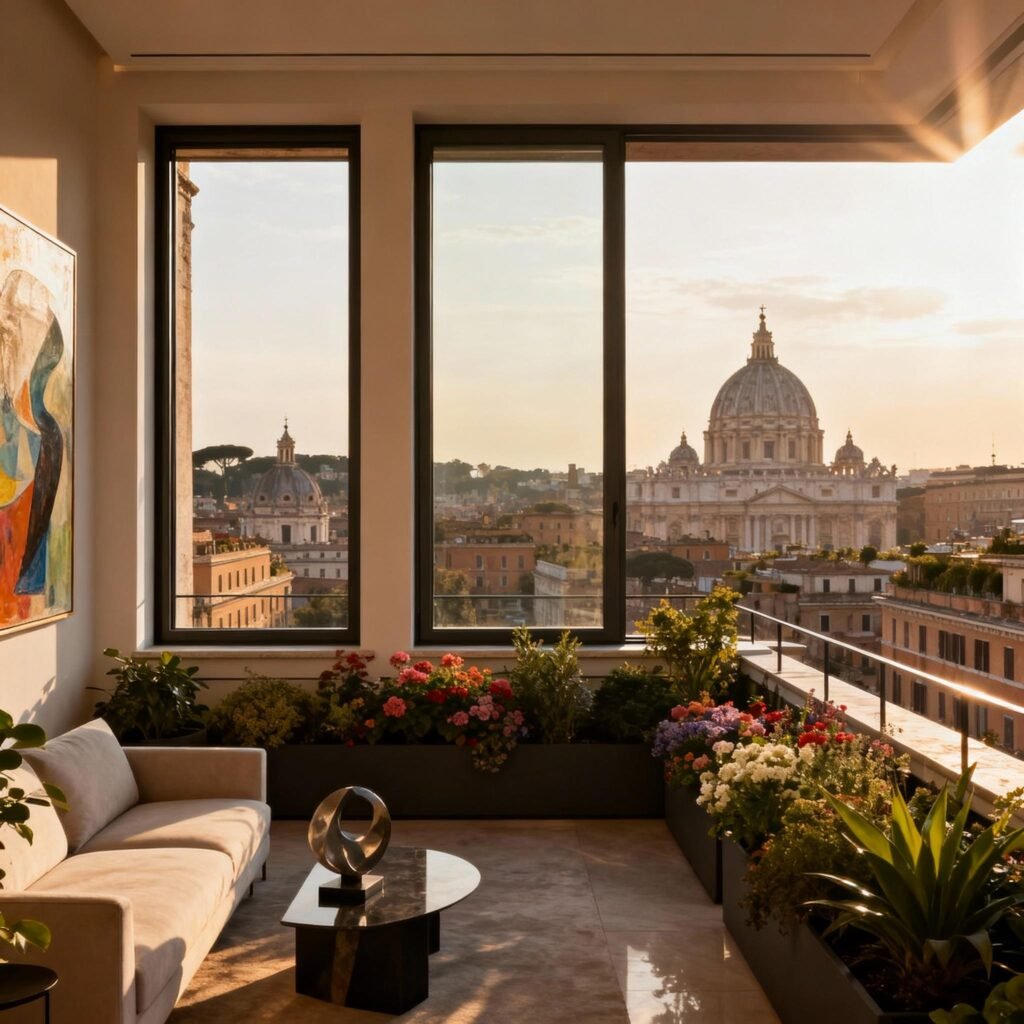
Developers are now introducing projects that offer terraces, concierge services, gyms, co-working spaces and contemporary interiors. New residential schemes in areas such as La Sapienza, EUR and the western districts are broadening the choice available to buyers who want modern facilities alongside access to the historic city.
The pipeline is substantial. Industry estimates indicate that approximately 4,500 new homes could be delivered in Rome by 2029, exceeding the expected pipeline in Milan over the same period. Whether that supply meets demand will depend on pricing, delivery schedules and the affordability of new developments.
Prices Rise, but Challenges Remain
Rome’s prime residential prices have increased in recent years, reflecting stronger demand and limited availability of high-quality properties. Yet the city remains relatively affordable compared with several competing European capitals, giving it room to attract further international interest.
That does not make every property an attractive investment. Buyers still face complex legal checks, potential discrepancies between approved building plans and existing structures, renovation costs and lengthy administrative procedures. Social integration and access to local professional networks can also complicate relocation.
The market is therefore becoming more international, but it remains highly dependent on the quality and location of individual properties. A renovated apartment in a prime district may appeal to a different buyer profile than a property requiring extensive restoration or one located far from transport links.
Rome’s transformation is strengthening its position in the European luxury property market. Public investment, new residential supply and international demand are creating momentum, but the city’s long-term competitiveness will depend on whether improvements continue and administrative barriers become easier to navigate.
Sources
- Financial Times — ‘La dolce vita’ 2.0: Rome is luring homebuyers with a revamp
- Immobiliare.it — Rome residential property market and price trends
- Dils — Italy real estate market report, Q3 2026
- Engel & Völkers — Where to invest in Rome in 2026
- idealista — Can foreign buyers purchase luxury property in Italy?