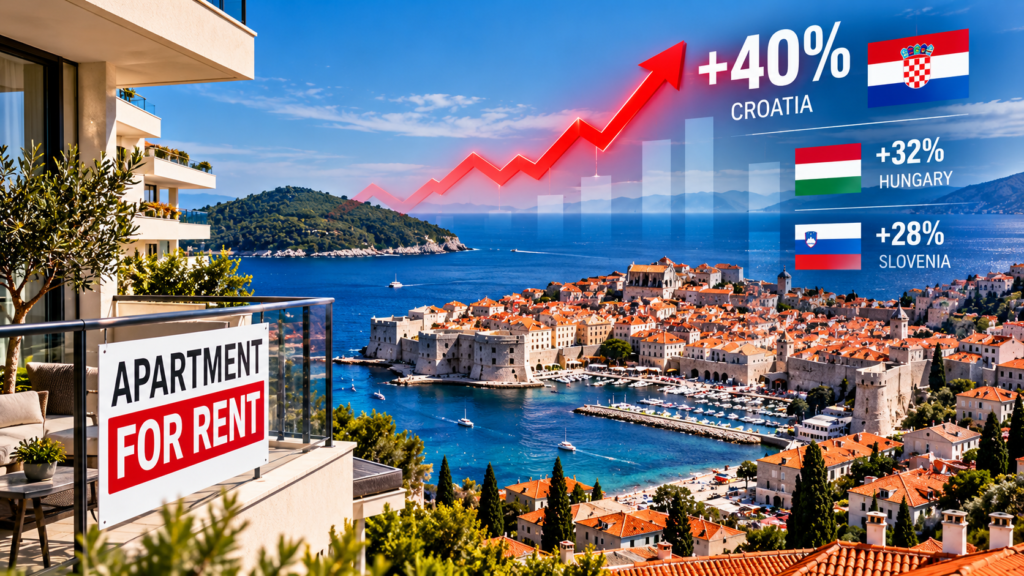
Rents across Europe are rising sharply, with Croatia recording a 40.1% annual increase and Slovenia also experiencing significant growth, according to figures reported for the second quarter of 2026.
The latest figures highlight mounting pressure on European housing markets. Rising rents are squeezing household budgets, making it harder for workers to live near major employment centres and slowing the ability of younger households to save for a home deposit.
Croatia’s rental market faces particular challenges as demand for tourist accommodation competes with demand for long-term housing. In coastal destinations, property owners may favour short-term holiday lets, reducing the supply available to local residents. Investment demand and limited affordable housing can add further pressure.
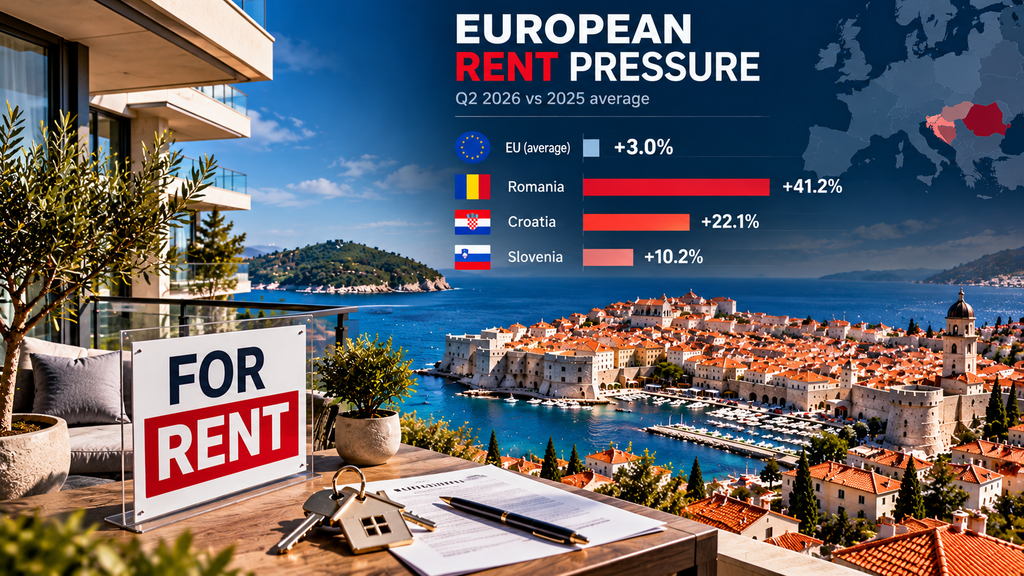
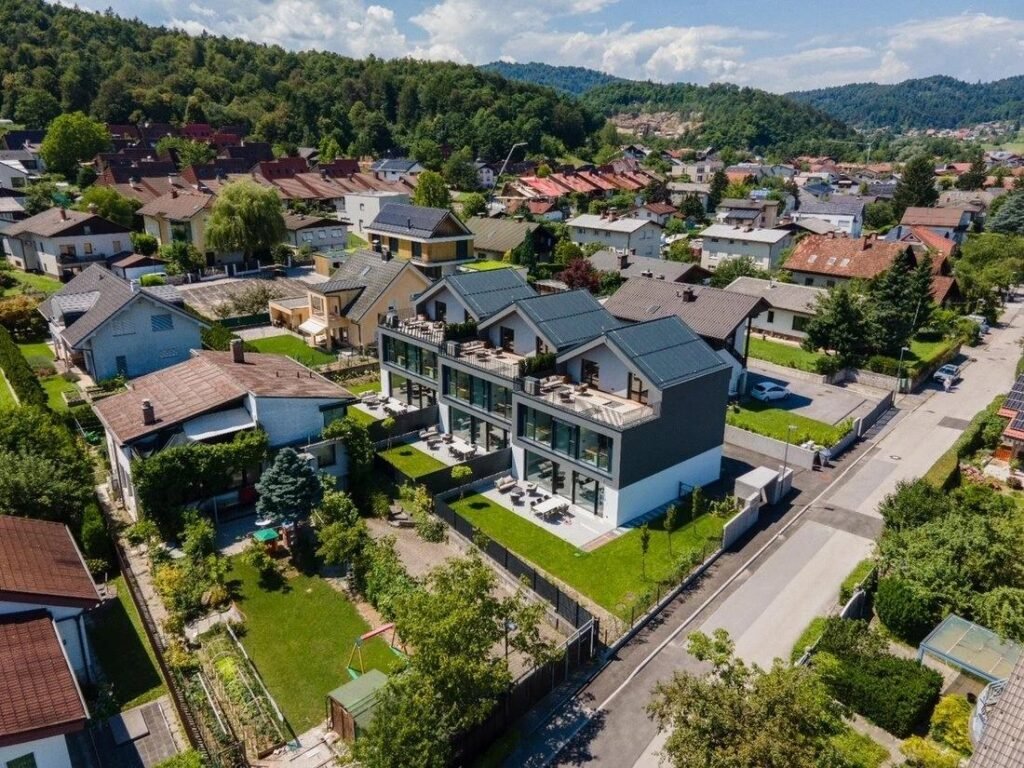
Slovenia is facing its own affordability concerns. Strong demand in urban areas, particularly Ljubljana, combined with limited housing supply, has made finding reasonably priced accommodation difficult for many tenants. Higher rents can also push workers farther from city centres, increasing commuting costs and reducing disposable income.
For property investors, rising rents may improve potential rental income, but headline growth rates do not automatically translate into higher returns. Purchase prices, financing costs, maintenance, vacancy periods, taxation and regulatory changes all affect net yields. Markets experiencing rapid increases may also face political pressure for measures to improve affordability.
Governments across Europe are therefore confronted with a difficult balance: encouraging the construction and long-term rental of homes while keeping housing accessible to residents. Policies aimed at vacant properties and affordable rentals may help, but their impact depends on implementation and whether they bring additional homes onto the market.
The central issue is supply. Without more homes available for long-term occupation, rental costs are likely to remain a major financial burden for households in high-demand areas.