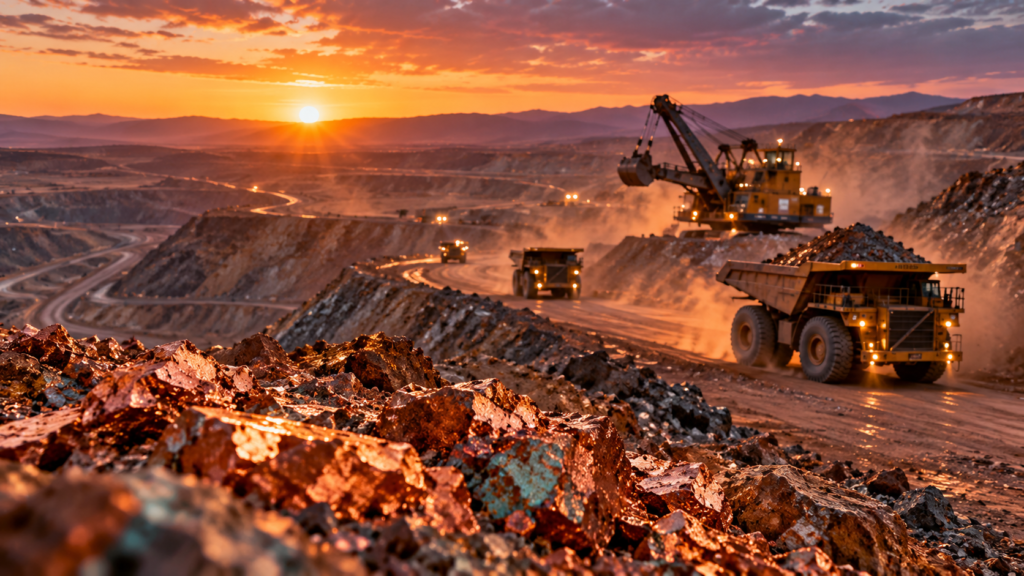
Rising copper prices and growing concerns over future supply shortages are breathing new life into dormant mines, as producers seek faster ways to bring additional metal to market. From Australia to Zambia and Argentina, mining companies are reconsidering assets that were previously uneconomic or had been shut for years.
The shift reflects a structural challenge for the copper industry: demand is expected to grow as electricity networks expand, renewable energy capacity increases and data centres require more power infrastructure. Developing entirely new mines can take many years, making existing sites an increasingly attractive source of potential supply.

Mt Lyell prepares for return
One prominent example is Tasmania’s Mt Lyell mine, which Sibanye-Stillwater has approved for redevelopment after more than a decade out of operation. The company expects to invest around $340 million and aims to restart production in 2029, with annual output projected at approximately 26,000 metric tonnes.
The project illustrates why older mines are attracting renewed attention. Existing deposits, infrastructure and historical geological information can reduce the time needed to develop a project compared with building a mine from scratch. However, rehabilitation, modernisation and safety upgrades can still require substantial capital.
Other potential restarts include Zambia’s Luanshya mine, where redevelopment is intended to lift production towards 100,000 tonnes annually by 2030, and Argentina’s Alumbrera mine, which Glencore plans to revive. The Cobre Panama and Panguna projects could also contribute significant volumes, although political and social obstacles make their futures less certain.
Supply growth may fall short
Benchmark Mineral Intelligence is tracking nearly one million tonnes of potential annual copper output from mine restarts by 2030. That would represent more than 4% of current global production, offering meaningful additional supply but not necessarily enough to resolve a prolonged shortage.
S&P Global Energy projects that annual copper demand could rise by 50% to 42 million tonnes by 2040. Even with new projects, restarts and expansions, the market could face a substantial supply gap if investment and development fail to keep pace.
The limits are significant. Dormant mines may have flooded workings, ageing processing facilities, environmental liabilities or outdated waste-storage infrastructure. Permits may also need to be renewed, while communities and political authorities can oppose projects for reasons unrelated to commodity prices.
Investors face execution risks
The revival of old mines creates opportunities for mining companies that can restart production at competitive costs. But higher copper prices alone do not guarantee a profitable project. Construction expenses, labour availability, operating costs and future price volatility can all undermine expected returns.
For the wider market, restarts may provide a bridge between current supply constraints and the longer-term development of new deposits. They are unlikely to eliminate the need for major discoveries and new mines, particularly if electrification and data-centre investment continue to increase demand.
Copper’s outlook therefore depends on more than the price of the metal. The pace at which producers can deliver reliable, economically viable supply will help determine whether the market experiences a temporary squeeze or a more persistent structural deficit.