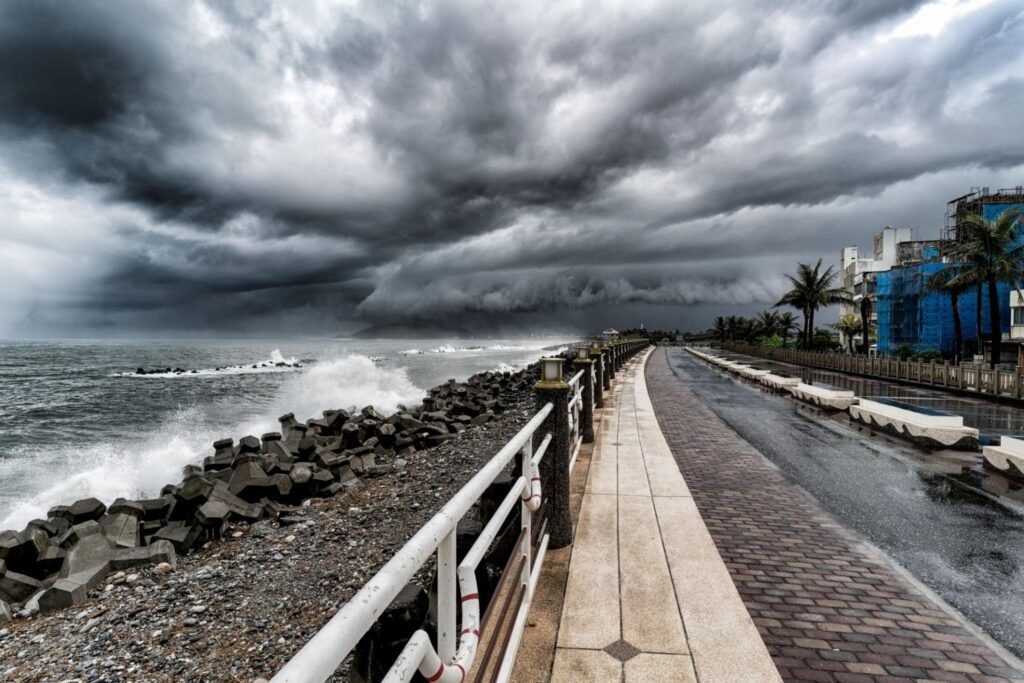
Super Typhoon Champi is approaching Taiwan as a powerful Pacific storm raises concerns about extreme rainfall, dangerous coastal conditions and disruption across East Asia. The system has weakened slightly from its peak intensity, but it remains capable of producing destructive winds and torrential rain.
The storm’s approach comes amid growing concerns about a developing El Niño, a climate pattern that can influence ocean temperatures, rainfall and tropical cyclone behaviour across the Pacific. Together, these developments highlight the growing economic and environmental risks associated with extreme weather.
A Powerful Storm Approaches
Champi developed into one of the strongest tropical cyclones of the 2026 Pacific season, reaching exceptional intensity before beginning to weaken. Its projected path brings it near Taiwan before moving toward waters near China and potentially Japan.
Despite its gradual weakening, the storm remains dangerous. Powerful winds, large waves and exceptionally heavy rainfall threaten coastal communities and mountainous areas.
The principal risks include flooding, landslides, coastal inundation and infrastructure damage. Mountainous terrain can intensify the consequences of prolonged rainfall, particularly where saturated ground increases the likelihood of slope failures.
The storm’s precise track remains critical. Even without a direct landfall, a large typhoon can generate destructive conditions across a wide area, disrupting transportation, electricity supplies and commercial activity.

El Niño Raises Concerns
Typhoon Champi is approaching East Asia as meteorologists monitor a developing El Niño that could become exceptionally strong.
El Niño is a naturally occurring climate pattern characterised by warmer-than-average sea-surface temperatures across parts of the central and eastern equatorial Pacific. It influences atmospheric circulation and can change rainfall patterns, temperatures and tropical cyclone behaviour across multiple regions.
A particularly strong event could have significant implications for global weather patterns over the coming months. However, the relationship between El Niño and individual typhoons is complex. The phenomenon can influence where tropical cyclones form, how they travel and which atmospheric conditions support their development, but it does not automatically make every storm stronger.
Champi’s intensity must therefore be understood through its immediate atmospheric and oceanic conditions as well as the broader climate pattern.
Economic Risks Spread
The economic consequences of a major typhoon can extend well beyond the areas directly affected by wind and flooding.
Taiwan occupies a strategically important position in global technology supply chains, particularly semiconductor manufacturing. Although the extent of any disruption depends on the storm’s actual path and local conditions, severe weather can affect employee access, transportation, logistics, electricity reliability and port operations.
The island’s technology industry is particularly sensitive to interruptions because advanced manufacturing depends on stable power, specialised equipment, tightly managed production environments and reliable deliveries.
Even temporary disruptions can create logistical complications for manufacturers and customers operating with limited inventory buffers. However, the extent of any economic damage cannot be determined from the storm’s intensity alone.
Regional shipping and aviation are also exposed. Flight cancellations, port restrictions and changes to shipping schedules can delay goods and increase operating costs for businesses throughout East Asia.
For investors, the important distinction is between short-lived operational interruptions and sustained damage to production capacity. Temporary disruptions may create volatility, while prolonged interruptions can have more meaningful implications for company earnings and regional economic activity.
Climate Risk and Insurance
Extreme weather events also highlight the growing financial importance of climate-related risk management.
Insurers and reinsurers must evaluate potential losses from property damage, business interruptions, agricultural disruption and transportation claims. A severe event can generate claims across multiple sectors simultaneously, especially when flooding and high winds affect densely populated coastal regions.
Governments face a different challenge: balancing emergency response costs with longer-term investment in drainage, flood defences, early-warning systems and resilient infrastructure.
El Niño adds complexity because its effects can extend across seasons and continents. Some regions may experience excessive rainfall, while others face drought, heat stress or reduced agricultural output.
For financial markets, the consequences may emerge gradually through insurance pricing, infrastructure spending, food prices and the cost of protecting vulnerable assets.
What Happens Next?
The immediate outlook depends on Champi’s movement away from Taiwan and its subsequent interaction with changing atmospheric conditions.
Authorities will need to assess rainfall totals, coastal impacts and the potential for flooding even after the storm begins to weaken. Residents should follow official local warnings, avoid exposed coastal and mountainous areas during dangerous conditions, and prepare for possible transport or power disruptions.
The longer-term question is how the developing El Niño will influence weather patterns across the Pacific through the end of 2026 and into 2027.
A strong event could affect agriculture, water availability, energy demand and disaster preparedness across several regions. Yet the effects will differ substantially by location, and seasonal forecasts should not be interpreted as precise predictions of individual disasters.
The Bigger Picture
Typhoon Champi illustrates how a single extreme weather event can connect public safety, climate science, industrial production and financial risk.
Taiwan and neighbouring areas face immediate threats from destructive winds, heavy rain and dangerous seas. Beyond the storm’s path, businesses and investors must consider potential supply-chain interruptions and the broader implications of an unusually strong El Niño.
The central lesson is that economic exposure to extreme weather extends far beyond the physical footprint of a cyclone. In an interconnected global economy, disruption to one strategically important region can have consequences for manufacturers, transport networks, insurers and consumers worldwide.
Sources
- Bloomberg — Typhoon Champi Heads for Taiwan as El Niño Supercharges Season
- Reuters — Reporting on Typhoon Champi and Taiwan’s storm warnings
- World Meteorological Organization — El Niño monitoring and seasonal outlooks
- Taiwan Central Weather Administration — Tropical cyclone forecasts and warnings
- Japan Meteorological Agency — Tropical cyclone information