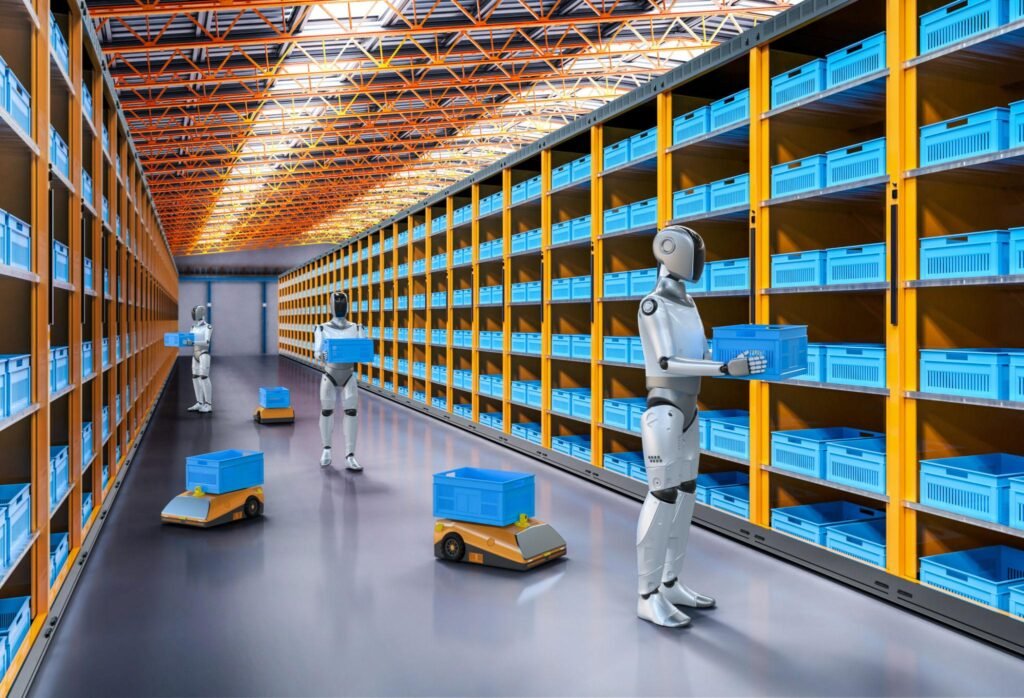
Robotics and physical artificial intelligence are emerging as major destinations for venture capital, as investors look beyond software and toward machines capable of performing work in the physical world.
Robotics and physical AI startups attracted a reported $33.4 billion in funding during the first half of 2026. The acceleration reflects growing confidence that advances in AI models, sensors and computing power can make robots more adaptable, useful and commercially viable.
The investment opportunity spans industrial automation, warehouse logistics, autonomous systems, humanoid robots and intelligent machinery. Yet the surge in funding also raises a critical question: can the industry turn ambitious demonstrations into reliable products that customers are willing to buy and deploy at scale?
From Software to Physical AI
The first wave of generative AI transformed how businesses process information, write software and interact with digital services. Physical AI extends this shift into the real world, enabling machines to interpret their surroundings, make decisions and carry out physical tasks.
Improvements in vision systems, AI models and simulation are helping developers build robots that can respond to changing environments rather than follow only rigidly programmed instructions.
For manufacturers, this could mean machines that adapt more easily to new production tasks. In warehouses, robots could improve picking, sorting and material handling. In logistics and other service industries, autonomous systems could help address labour shortages and reduce repetitive work.
The commercial appeal is clear: if robots can perform more tasks safely and consistently, businesses may be able to increase productivity while reducing operating costs. However, performance in a controlled demonstration does not necessarily translate into dependable operation across a busy factory or warehouse.

Capital Is Following Automation
The funding surge reflects a broader change in how investors assess the next phase of AI. Rather than concentrating exclusively on software developers and model providers, venture capital is increasingly flowing into the hardware, computing systems and industrial technologies needed to bring AI into everyday operations.
The opportunity extends well beyond humanoid robot manufacturers. Sensors, precision actuators, robotic components, edge computing and safety systems may all benefit as machines become more capable. These supporting technologies can serve multiple applications, potentially offering investors exposure to the broader automation market rather than relying on the success of a single robot platform.
Industrial automation is particularly important because businesses can evaluate it against measurable outcomes, including throughput, downtime, labour requirements and product quality. This creates a clearer commercial case than consumer-facing robots whose everyday usefulness and willingness to pay remain less established.
For investors, the most attractive businesses may ultimately be those that solve specific operational problems and generate recurring revenue, rather than those that attract the greatest attention through futuristic prototypes.
Humanoid Robots Face a Reality Check
Humanoid robots have become one of the industry’s most visible investment themes, partly because their human-like form could allow them to operate in environments designed for people.
Factories, warehouses and commercial facilities already contain workspaces, tools and equipment built around human movement. A capable humanoid could therefore perform multiple tasks without requiring every environment to be redesigned around a specialised machine.
However, flexibility remains difficult to achieve. Robots must manipulate unfamiliar objects, maintain balance, interpret unpredictable situations and operate safely around people. Battery life, maintenance, reliability and the cost of deployment also affect their commercial value.
Industry adoption remains at an early stage. Many deployments are still focused on research, development and controlled industrial trials rather than widespread commercial production.
The distinction matters for valuations. A company may demonstrate impressive technical progress without having a proven business model, scalable manufacturing capacity or sufficient recurring revenue to justify its valuation.
The Commercialisation Challenge
The industry’s next phase will be determined less by fundraising announcements and more by deployment results.
Robotics companies face several structural challenges:
- High development costs: Hardware requires engineering, testing, manufacturing and physical infrastructure that software businesses can often avoid.
- Limited real-world data: Robots need diverse training experiences to handle unpredictable environments reliably.
- Manufacturing complexity: Scaling production while maintaining quality, safety and reasonable unit costs is difficult.
- Uncertain returns: Customers need evidence that productivity gains justify equipment, integration and maintenance costs.
These challenges create a potential divide between technically impressive startups and businesses capable of building sustainable operations.
Investors must also consider whether valuations already reflect years of anticipated growth. Intense competition for promising companies can drive funding rounds to levels that leave little room for execution delays or weaker-than-expected demand.

Where Investment Opportunities May Emerge
The investment case for robotics extends across several connected industries.
Industrial automation providers may benefit as manufacturers seek higher productivity and more flexible production. Component suppliers could gain from demand for precision motors, actuators, sensors and robotic control systems. Computing companies may also benefit as increasingly sophisticated machines require more processing power.
Another opportunity lies in the software that coordinates robotic fleets, analyses operational data and manages autonomous systems. These services could create recurring revenue streams that complement equipment sales.
However, these are potential beneficiaries, not guaranteed winners. Investors should assess revenue quality, customer concentration, cash burn, manufacturing capacity and the time required to achieve profitability. Private-market funding totals alone do not establish the value or future performance of individual companies.
The Outlook
The acceleration in robotics investment signals growing confidence that AI will increasingly influence physical industries, not just digital services.
The long-term opportunity could be substantial if machines become affordable, adaptable and reliable enough to perform economically valuable tasks at scale. Industrial automation may provide the clearest near-term commercial pathway, while humanoid robotics offers a broader but more uncertain opportunity.
For investors, the key distinction is between technological promise and commercial proof. Funding can accelerate development, but lasting value will depend on customers adopting the technology, measurable productivity gains and businesses generating sustainable returns.
The robotics boom is gaining momentum. Whether it becomes a durable investment cycle will depend on how effectively the industry converts capital into machines that work reliably outside the laboratory.